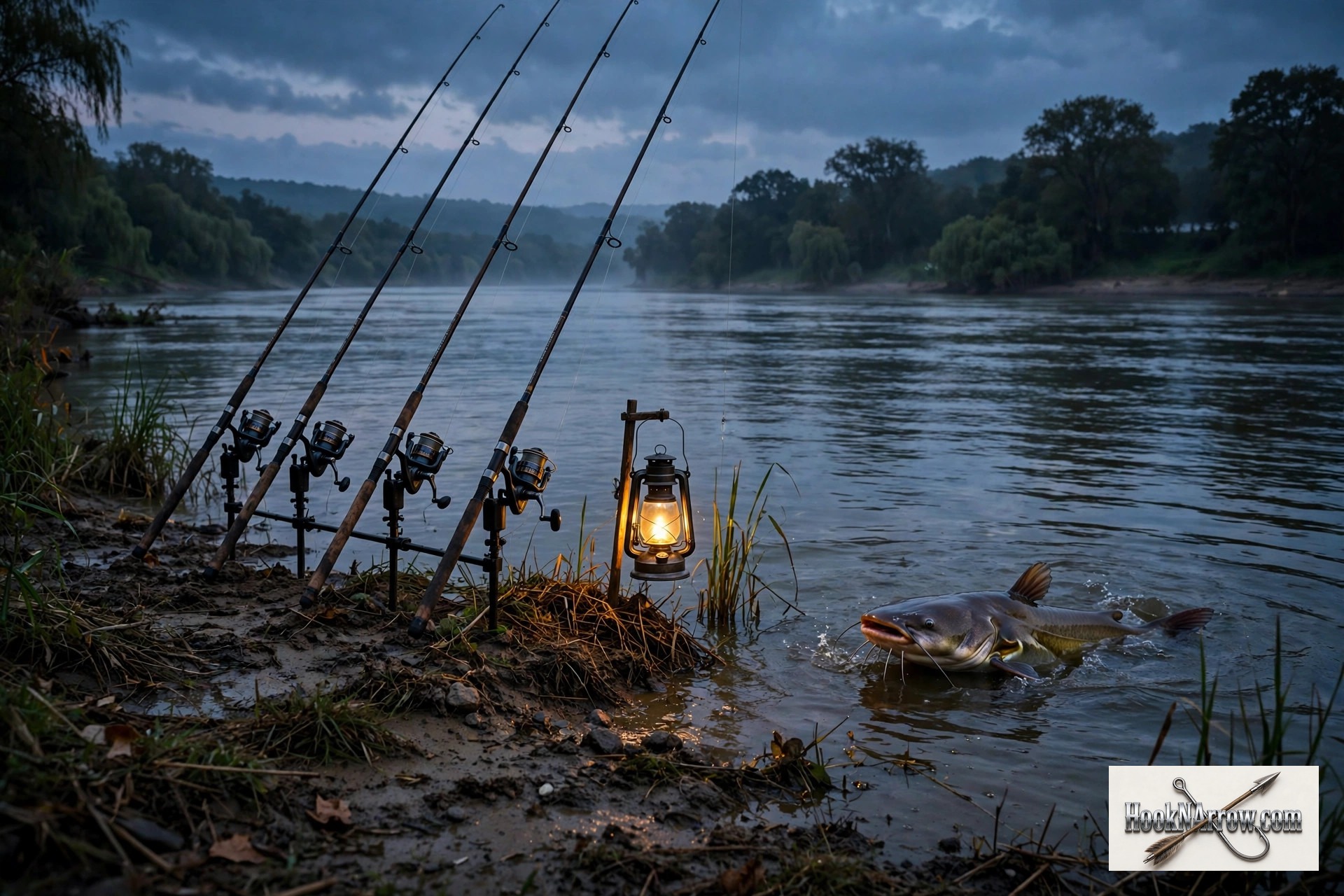
Category: Buying Guides

  • Best Catfishing Gear 2026

    Best Catfishing Gear 2026

    Catfishing is the most democratic big-fish game in America. You don’t need a boat that costs more than your truck — a stout rod, a reel with real drag, sharp circle hooks, and something that stinks is enough to tangle with a 40-pound blue cat. Channel cats fill farm ponds and city lakes, blue cats roam the big reservoirs, and flatheads own the rivers and logjams. All three pull harder than anything else in freshwater at their size, and they live in places full of current, rocks, and timber that will punish light tackle.

    Catfish gear is built around a simple truth: the fish finds the bait, picks it up, and runs — your job is to survive that first run and turn the fish. That means medium-heavy to heavy rods with enough backbone to move a big fish in current, reels with smooth, strong drags and plenty of line capacity, circle hooks that set themselves in the corner of the mouth, and sinkers that stay put on the bottom instead of rolling downstream. Finesse has no place here. Buy tough, buy simple, and spend your money on terminal tackle — hooks and line are where catfish are actually won and lost.

    This guide explains what to look for in catfish gear and covers five proven picks: a rod and reel that form the backbone of a bank or boat setup, the circle hooks most serious catmen trust, no-roll sinkers for fishing current, and a prepared bait that catches channels and blues when fresh bait isn’t an option.

    What to Look For

    Rod power and action. Medium-heavy to heavy power is the standard for catfishing — you need backbone to drive a big hook home and muscle a fish out of cover. Moderate or moderate-fast action is the sweet spot: the softer tip lets a catfish take the bait without feeling resistance (critical with circle hooks), while the lower two-thirds of the rod does the heavy lifting. Seven to eight feet is the versatile range — long enough to cast heavy sinkers and bait from the bank, short enough to manage in a boat. Look for durable guides; cheap inserts pop out when you’re horsing braid through them.

    Reel strength and line capacity. A catfish reel needs two things: a smooth, strong drag and enough line capacity to survive a long run. Round baitcasting reels are the traditional choice for big blues and flatheads — they hold more heavy line and their drags are built for punishment. Big spinning reels (5000 size and up) work fine for channels and general duty. Either way, look for 20+ pounds of max drag and the capacity to hold 150+ yards of 30- to 50-pound line. A bait clicker (line-out alarm) is a genuinely useful feature for still-fishing — you’ll hear the run before you see the rod tip move.

    Circle hooks. This is the single most important piece of catfish tackle. Circle hooks set themselves — the fish takes the bait, turns, and the hook slides into the corner of the mouth as the line tightens. Don’t jerk the rod; just let it load up or reel steadily. Inline (non-offset) circle hooks are required in some waters and are the conservation-friendly choice everywhere. Size up with your bait and your target: 5/0 to 7/0 covers most channel cat and eater-blue fishing, 8/0 to 10/0 for trophy blues and flatheads on big cut bait. Buy sharp, buy strong, and never straighten a cheap hook on a good fish.

    Sinkers that stay put. Catfish live on the bottom, often in current, so your sinker has to hold your bait in the strike zone instead of tumbling downstream. Flat disc or no-roll sinkers are the answer for rivers — their shape grips the bottom and resists rolling. Egg sinkers work for Carolina-style rigs in lakes where the fish can take line freely. Match weight to current: an ounce or two for lakes and slow water, three to eight ounces (or more) for heavy river current. Buy in bulk — you will donate plenty of lead to the river gods.

    Line. Braided line in 40- to 65-pound test is the modern standard for catfishing: no stretch for solid hooksets, thin diameter for its strength, and it saws through nothing — it just doesn’t break. Monofilament in 25- to 40-pound test still has its fans for the stretch that cushions surging fish and for anglers who fish a lot of abrasive rock. Either way, run a heavy monofilament or fluorocarbon leader (40- to 80-pound) for abrasion resistance around timber, rocks, and a catfish’s sandpaper mouth.

    Bait. Fresh cut bait — shad, skipjack, bluegill — is the undisputed king for blue cats and flatheads; nothing manufactured beats the real thing. But fresh bait isn’t always available, which is where prepared dip, punch, and dough baits earn their keep, especially for channel cats. The best prepared baits are sticky enough to stay on a dip worm or treble hook and stinky enough to pull fish from a distance. Match the bait to the species: channels love prepared stink baits, blues want fresh cut bait, flatheads want live bait.

    Our Picks

    Ugly Stik Catfish Special Spinning Rod — best all-around catfish rod

    The Catfish Special is purpose-built for exactly what its name says: casting for catfish from banks, shores, and dams. The 7-foot medium-heavy blank uses Ugly Stik’s Ugly Tech graphite-and-fiberglass construction, so it has the backbone to handle big fish with a tip sensitive enough to read light bites — the Clear Tip design puts extra strength right where strikes register. One-piece Ugly Tuff stainless guides won’t pop inserts under heavy braid, the full rubberized shrink-wrap handle grips well with wet or slimy hands, and it carries a 7-year rod warranty. This is the rod that lives in the truck bed and never complains.

    Who it’s for: The bank angler or weekend catman who wants one tough, affordable rod that handles channels, eater blues, and the occasional surprise flathead.

    Pros: Genuinely tough graphite/fiberglass blank at a workingman’s price; sensitive Clear Tip for a heavy-power rod; one-piece stainless guides eliminate insert pop-out; 7-year warranty.

    Cons: A spinning rod isn’t the ideal match for a round baitcaster setup — pair it with a big spinning reel; 7 feet can feel short for extreme long-distance bank casting; not enough rod for true trophy-blue specialists.

    Purchase this item on Amazon →

    KastKing Rover Round Baitcasting Reel — best round reel for big cats

    The Rover is a classic-style round baitcaster built for exactly the kind of abuse catfishing dishes out. The reinforced aluminum frame, stainless steel components, and carbon fiber drag system deliver up to 30 pounds of max drag (size dependent), with 4+1 or 6+1 stainless bearings depending on size. It comes in sizes from 40 up to 90, so you can match the reel to your quarry — a 60 for channels and eater blues, a 70 or 80 when you’re hunting true giants. The line-out clicker alarm is worth its weight in gold for still-fishing: set the rod in a holder, engage the clicker, and you’ll hear the take before anything else happens.

    Who it’s for: The angler chasing blue cats and flatheads who wants traditional round-reel cranking power, big line capacity, and a drag that won’t fade on a long run.

    Pros: Strong carbon drag system with up to 30 pounds of stopping power; wide size range from 40 to 90 to match any catfish application; line-out clicker for rod-holder fishing; metal construction at a price that undercuts the legacy round reels.

    Cons: Round reels are heavier than low-profile baitcasters — your wrist will know after a long day of casting; the classic design has a learning curve if you’ve only used spinning gear; finish and tolerances aren’t at the level of reels costing three times more.

    Purchase this item on Amazon →

    Gamakatsu Octopus Circle Inline Point Hooks (25-Pack, 7/0) — best catfish hooks

    Ask a room full of serious catfishermen what hook they trust and Gamakatsu circle hooks will win the vote. This 25-pack of 7/0 inline-point Octopus Circle hooks hits the sweet spot for most catfishing — big enough for chunk cut bait and live bluegill, with Gamakatsu’s famously sharp, consistent points that penetrate on the turn without a hard hookset. The inline (non-offset) point is legal everywhere circle hooks are required and hooks cleanly in the corner of the mouth for easy release. Twenty-five hooks per pack means you can re-tie without doing terminal-tackle math on the tailgate.

    Who it’s for: Any catfish angler running cut bait or live bait who wants hooks that set themselves and hold — from pond channels to reservoir blues.

    Pros: Razor-sharp out of the pack with excellent quality control; inline point is regulation-friendly and promotes clean corner-of-mouth hooksets; 7/0 is a true all-arounder size; 25-pack is good value for a premium hook.

    Cons: Premium hooks cost more than bulk bargain brands — you’ll feel every snag; 7/0 is small for trophy-class blues on whole skipjack (size up to 10/0); you still have to check points and replace dulled hooks.

    Purchase this item on Amazon →

    Rotatingpals Disc Sinkers (2 oz, 36-Pack) — best no-roll sinkers for current

    The flat coin shape is the whole idea: disc sinkers lay flat on the bottom and resist rolling in current far better than round bank sinkers, so your bait stays in the strike zone instead of tumbling into the next county. These 2-ounce discs suit moderate river current and Carolina-style rigs, the smooth center hole won’t abrade your line, and the 36-pack means losing a few to snags doesn’t sting. Two ounces is a versatile middle weight — enough to hold in real current, light enough for controlled drifts and lake fishing.

    Who it’s for: River catfishermen who fish current and need their bait to stay put, plus anyone tired of re-casting every ten minutes.

    Pros: Flat disc profile genuinely resists rolling in current; smooth holes protect line; 36-pack bulk value for a consumable you will lose; 2 oz is a versatile do-most-things weight.

    Cons: Two ounces won’t hold in heavy flood-stage current — you’ll need heavier discs for that; disc sinkers snag in rocks about as readily as anything; bulk packaging, no fancy tackle-box-ready container.

    Purchase this item on Amazon →

    Team Catfish Secret 7 Dip Bait — best prepared catfish bait

    When you can’t get fresh shad, Secret 7 is the prepared bait that actually produces. The silky, sticky blend of fish attractants loads easily onto dip tubes and worms, puts out a serious scent trail, and has a tournament track record — it’s won events on the national catfish circuits. It’s at its best on channel cats and blue cats in ponds, lakes, rivers, and streams. Yes, it stinks. That’s the point. Keep a dedicated bait towel and don’t wear your good shirt.

    Who it’s for: Channel cat anglers and anyone who needs a ready-to-fish bait without netting shad at dawn — pond hoppers, bank fishermen, and kayak catmen especially.

    Pros: Proven tournament-winning formula, not just marketing; sticky texture stays on dip worms and tubes; effective on both channels and blues; no refrigeration or live-bait logistics.

    Cons: It smells awful to humans and the smell lingers on skin and gear; flatheads largely ignore prepared baits — they want live bait; you’ll need dip tubes or worms, which is an extra purchase if you don’t own them.

    Purchase this item on Amazon →

    Catfishing Tips

    • Don’t set the hook on circle hooks. This is the number-one mistake. With the rod in a holder and the clicker on, let the fish take the bait and turn — the circle hook slides into the corner of the mouth on its own. When the rod loads up, just pick it up and reel. Jerking pulls the bait (and the hook) right out of the fish’s mouth.
    • Fresh bait beats everything for blues and flatheads. Fresh-cut shad or skipjack is the gold standard for blue cats; live bluegill or bullheads are what big flatheads want. Prepared dip baits are excellent for channels, but if you’re specifically hunting trophy blues or flatheads, put in the time to get fresh or live bait.
    • Fish the current seams. In rivers, catfish hold where fast water meets slow water — below dams, at creek mouths, along outside bends, behind wing dams and logjams. Cast upstream of the seam and let your sinker settle right on the break. In lakes, look for creek channels, humps, and flats adjacent to deep water.
    • Fish at night in summer. Big catfish, especially flatheads, feed most aggressively after dark in warm months. Set up on a good bank spot an hour before sunset, get your baits out, and settle in. Bring more bug spray than you think you need.
    • Use rod holders and clickers. Catfishing is a waiting game, and a proper rod holder with the reel’s bait clicker engaged means you never miss a run — and your rod never goes swimming. PVC bank holders cost almost nothing and save expensive setups.
    • Handle big cats with respect. Lip-gripping a big blue or flathead like a bass is a good way to get a treble-equivalent surprise from dorsal and pectoral spines — they will puncture a hand. Use lip grippers or a firm grip behind the gills, support the belly on truly big fish, and get them back in the water quickly.

    FAQ

    What’s the best bait for catfish? It depends on the species. Fresh cut bait — shad, skipjack, bluegill chunks — is the top choice for blue cats. Live baitfish are the ticket for flatheads. Channel cats are the least picky and crush prepared dip and punch baits like Secret 7, plus nightcrawlers, chicken liver, and shrimp. If you only pick one all-arounder for channels and eater-size blues, fresh cut shad is hard to beat.

    Should I use circle hooks or J-hooks for catfish? Circle hooks, in most situations. They set themselves in the corner of the mouth, which means better hookup ratios for anglers fishing rod holders — and far fewer gut-hooked fish, which matters if you release fish. J-hooks (like Kahle or treble hooks) still have a place with prepared dip baits and when you’re holding the rod and setting the hook yourself. Some waters require circle hooks, so check your state regulations.

    What pound test line do I need for catfish? For general channel cat and eater-blue fishing, 20- to 30-pound mono or 40- to 50-pound braid covers it. If you’re targeting trophy blues or flatheads in heavy cover or current, step up to 50- to 65-pound braid with an 80-pound leader. The leader matters as much as the main line — a catfish’s mouth and the rocks it lives around will shred light leaders.

    Do I really need a special rod for catfishing? You need a rod with enough power, but it doesn’t have to say “catfish” on it. Any medium-heavy to heavy rod rated for the line and lure weights you’re throwing will work — heavy bass rods, inshore saltwater rods, and downrigger rods all catch catfish. Dedicated catfish rods just get the details right: longer handles for two-handed casts with heavy sinkers, durable guides, and actions tuned for circle hooks.

    When is the best time to catch catfish? Catfish bite year-round, but the prime windows are spring (pre-spawn feeding) and summer nights. Flatheads are famously nocturnal in summer — after dark is when the giants move. Blue cats feed aggressively in winter on deep wintering holes, which surprises a lot of people. Overcast, stable weather days beat bright, high-pressure afternoons just about everywhere.

    Can I catch big catfish from the bank? Absolutely — some of the biggest catfish ever caught came from shore. The keys are access to the right water (below dams, creek mouths, deep holes within casting range), gear that can cast heavy sinkers and bait long distances, and patience. A 9- to 10-foot rod helps bank anglers reach distant current seams, and a good rod holder keeps everything in place while you wait.

    As an Amazon Associate I earn from qualifying purchases. Prices and availability change — HookNArrow.com only recommends gear we’d fish ourselves.

    Keep Reading: More Buying Guides

    Fishing:

    Hunting:

  • Best Fly Fishing Gear 2026

    Best Fly Fishing Gear 2026

    Fly fishing looks complicated from the bank — the vest, the line whipping around, the Latin names for bugs — but strip it down and it’s just fishing with a different delivery system. Instead of throwing the lure, you throw the line, and the line carries a nearly weightless fly to the fish. A 9-foot 5-weight outfit handles the overwhelming majority of American trout water, plus bass, panfish, and the scrappy Guadalupe bass in Texas Hill Country creeks. You don’t need a $900 rod to start. You need a balanced outfit, a box of proven flies, and a few weekends on the water.

    The money logic in fly fishing is friendlier than it looks. A complete starter outfit — rod, reel, line, leader, and case — costs less than a decent baitcasting setup, and the upgrade path is clear: better line first, a better reel second, and a better rod once your casting tells you what you actually like. Start with a combo, upgrade individual pieces as your skills outgrow them, and you’ll never buy the same thing twice.

    This HookNArrow.com guide explains what to look for in fly fishing gear and covers five pieces that take you from first cast to serious angler: a complete starter outfit, a value-priced reel worth upgrading to, a spare fly line, a fly assortment that covers real hatches, and breathable waders for cold water.

    What to Look For

    Rod weight and length. Fly rods are rated by line weight, and for a first rod the answer is almost always a 9-foot 5-weight. It’s the do-everything trout rod: long enough to mend line and roll cast, light enough to fish all day, and heavy enough to handle wind, weighted nymphs, and the occasional bass. Go lighter (3 or 4 weight) for small creeks and heavier (6 to 8 weight) for bass, steelhead, or saltwater — but the 5-weight is home base.

    Rod action. Action describes how the rod flexes. Fast-action rods are stiff and powerful; slow-action rods bend deep and feel buttery. Medium-fast is the beginner sweet spot — forgiving enough to learn timing on, with enough backbone to punch a cast into the wind. Four-piece rods break down for travel and are the modern standard.

    The reel. Here’s the open secret of trout fly fishing: the reel mostly holds line. You strip line in by hand for most trout, so a machined-aluminum reel with a smooth disc drag is a luxury, not a necessity — until a big fish runs. Buy a decent reel once and it’ll outlast three rods. Match the reel weight to your rod: a 5/6 reel on a 5-weight rod.

    Fly line. The line is the engine of the cast, and cheap line is the single biggest handicap a beginner can give themselves. Weight-forward floating (WF-F) is the standard trout line — the heavy head loads the rod and shoots line forward. Match the line weight to the rod weight, and look for welded loops at both ends for quick leader changes.

    Flies. You need far fewer patterns than the fly shop wall suggests. Nymphs (fished subsurface) catch the most trout day in and day out; dry flies (fished on top) are the most fun; streamers imitate baitfish and move the big ones. A starter assortment covering those three categories in common sizes will catch fish anywhere.

    Waders. Breathable stockingfoot waders are the standard: a waterproof-breathable upper with neoprene booties, worn with separate wading boots. Breathable beats neoprene for everything except dead-winter fishing — you’ll sweat less, move better, and fish longer. Stockingfoot (versus bootfoot) lets you pick boots with real ankle support and felt or rubber soles matched to your rivers.

    Fit and sizing. Waders come in a pile of sizes for a reason — too-short waders stress the crotch seams and leak early, too-long legs bunch in the boots. Check the manufacturer’s size chart against your actual measurements, not your jeans size. And always wear a wading belt: it keeps water out if you slip and can genuinely save your life.

    Our Picks

    Redington Crosswater Fly Fishing Outfit — best starter outfit

    The Crosswater outfit is the classic first fly rod for a reason: a 9-foot 5-weight medium-fast graphite rod in four pieces, a matched Crosswater reel with a smooth disc drag, RIO Mainstream weight-forward floating line already on the reel, a leader, and a zippered travel case that holds all of it. It’s genuinely ready to fish out of the box — tie on a fly and go. The rod is forgiving enough to learn on without being a noodle you’ll outgrow in a month, and Redington backs it with a warranty.

    Who it’s for: The first-time fly angler who wants one box that contains everything — trout streams, Hill Country creeks, farm ponds, all of it.

    Pros: Truly complete kit — rod, reel, line, leader, case; the 9′ 5wt configuration is the universal starter; medium-fast action is easy to learn on; breaks down into four pieces for travel.

    Cons: The included line is serviceable, not great — you’ll want better line eventually; the reel is basic compared to a machined upgrade; no flies included, so budget a starter assortment too.

    Purchase this item on Amazon →

    Piscifun Sword Fly Fishing Reel — best value reel upgrade

    The Sword is the reel that broke the price floor on machined fly reels: a CNC-machined 6061-T6 aluminum body, a smooth multi-disc drag, and a mid-arbor design that picks up line fast and reduces line memory. It comes in weights from 3/4 up to 9/10 — grab the 5/6 to match a standard 5-weight outfit — and it’s consistently one of Amazon’s best-selling fly reels, which means thousands of anglers have already voted with their wallets. Some versions come pre-loaded with line, which gets a backup setup fishing fast.

    Who it’s for: The angler who started with a combo and wants a real machined reel without paying machined-reel prices — or anyone building a second outfit.

    Pros: Genuine CNC-machined aluminum at a cast-reel price; smooth, adjustable drag for when a big fish actually runs; mid-arbor picks up line quickly; available in every weight from small creeks to saltwater.

    Cons: Fit and finish isn’t at the premium-brand level; the pre-loaded line (on versions that include it) is basic — plan to replace it; the drag knob takes some dialing to learn.

    Purchase this item on Amazon →

    SF Fly Fishing Line with Two Welded Loops — best spare/upgrade line

    Line is the cheapest meaningful upgrade in fly fishing, and this SF weight-forward floating line is the proof. Ninety feet of weight-forward taper with welded loops at both ends — one for the leader, one for the backing — so rigging takes seconds instead of nail knots. The WF5F matches the standard 5-weight starter rod, and the hi-vis color helps you track the line and detect strikes. Keep one as a spare in your vest and you’ll never lose a day to a cracked or sun-rotted line again.

    Who it’s for: The combo-kit owner ready for the single biggest casting upgrade under twenty bucks, or anyone who wants a backup line in the vest.

    Pros: Welded loops on both ends make leader changes tool-free; weight-forward taper loads beginner rods easily; high-visibility color aids strike detection; cheap enough to keep a spare.

    Cons: Not as slick or durable as premium $80+ lines; the coating can develop memory if stored wound tight in heat; color options are about visibility, not stealth.

    Purchase this item on Amazon →

    Ansnbo 36-Piece Fly Fishing Flies Kit — best fly assortment

    Thirty-six hand-tied flies across 18 proven patterns — Adams, Elk Hair Caddis, Pheasant Tail nymphs, Woolly Buggers, ants, and more — in hook sizes 8 through 16, packed in a waterproof fly box. That’s dries, wets, nymphs, and streamers: the full spread a beginner needs to fish any hatch or prospect unknown water. The patterns are the classics for a reason — they’ve been catching trout (and bass, and panfish) for decades — and at this price you won’t cry when a tree eats your best Elk Hair Caddis.

    Who it’s for: The new fly angler staring at a fly shop wall in despair — this box skips the analysis paralysis and gets you fishing.

    Pros: Covers dries, nymphs, wets, and streamers in one box; classic proven patterns, not random filler; waterproof box included; cheap enough that losing flies to trees doesn’t hurt.

    Cons: Hand-tied quality varies — inspect hooks before fishing; you may want to sharpen a few out of the box; serious anglers will eventually want locally-tied patterns for their home water.

    Purchase this item on Amazon →

    FROGG TOGGS Hellbender Breathable Stockingfoot Chest Wader — best waders

    The Hellbender is the wader half the internet learned in: a 4-ply breathable nylon upper with double-reinforced knees, 4mm neoprene booties, an oversized chest pocket plus zippered handwarmer pockets, and adjustable suspenders and wading belt. Breathable stockingfoot is the right configuration for most fly fishing — comfortable across seasons, with your choice of wading boots underneath — and the Hellbender delivers it at a fraction of premium-wader money. Sixteen size combinations mean you can actually get a fit that doesn’t stress the seams.

    Who it’s for: The angler moving beyond wet-wading into cold water and cold seasons — spring creeks, tailwaters, and winter trout.

    Pros: Breathable upper fishes comfortably across seasons; stockingfoot design pairs with proper wading boots; reinforced knees survive rocky banks; wide size range for a real fit.

    Cons: You’ll still need to buy wading boots separately; breathable waders demand seam care — dry them properly; tall anglers should double-check inseam measurements.

    Purchase this item on Amazon →

    Fly Fishing Tips

    • Practice on grass first. Tie a piece of yarn to your leader and cast on the lawn for a few evenings before you ever see water. Learning the timing of the backcast without trees, wind, and an audience watching will save you real frustration.
    • Start subsurface. Trout eat the vast majority of their food underwater, so nymphs and Woolly Buggers will outfish dry flies most days. Dry-fly fishing is the dream, but nymphing is the groceries.
    • Mend your line. The number-one beginner skill after the basic cast: flip the line upstream after it lands so your fly drifts naturally instead of dragging. A drag-free drift catches fish; a dragging fly catches nothing.
    • Wear the wading belt. Every time. It takes five seconds and it keeps your waders from filling with water if you slip. In cold, moving water that’s the difference between a story and a statistic.
    • Barbless is better while learning. Pinch the barbs on your flies. Hook removal — from fish and from yourself — gets dramatically easier, and the fish you release swim off stronger.
    • Don’t sleep on warm water. Fly fishing isn’t just trout: bass, bluegill, and Guadalupe bass in the Texas Hill Country eat flies with enthusiasm, and warm-water species forgive sloppy casts that trout won’t.

    FAQ

    What weight fly rod should a beginner buy? A 9-foot 5-weight. It handles the widest range of trout water, casts the widest range of flies, and every shop, guide, and friend you meet will have advice and spare gear that matches it. Specialize later — start in the middle.

    Do I need expensive gear to start fly fishing? No. A complete starter outfit costs less than many single baitcasting combos, and the fish genuinely don’t know what you paid. Spend your early money on time on the water and a few lessons, not on premium gear you can’t yet feel the difference in.

    What’s the difference between weight-forward and double-taper fly line? Weight-forward (WF) concentrates mass in the front of the line for longer casts and easier loading — it’s the beginner standard. Double-taper (DT) is symmetrical and delicate at short range but harder to cast far. Start with weight-forward floating.

    Do I need waders, or can I wet-wade? In warm weather and warm water, wet-wading in shorts and wading sandals is one of fly fishing’s great pleasures — Texas Hill Country summer fishing is perfect for it. When water temperatures drop into the 50s and below, or you’re fishing more than an hour, breathable waders keep you comfortable and safe.

    Can you fly fish in Texas? Absolutely. The Guadalupe River below Canyon Lake holds stocked rainbow trout in winter, and year-round the Hill Country creeks — the Llano, Guadalupe, San Marcos, and their tributaries — hold Guadalupe bass, largemouth, and sunfish that attack flies aggressively. A 5-weight is perfect for all of it.

    How do I know which fly to use? Start with the classics that work everywhere: a Woolly Bugger, a Pheasant Tail nymph, an Elk Hair Caddis, and an Adams. Then do what every good angler does — flip over a streamside rock, look at what’s actually living in the creek, and pick the fly in your box that looks most like it. When in doubt, ask the local fly shop what’s hatching.

    As an Amazon Associate I earn from qualifying purchases.

    Keep Reading: More Buying Guides

    Fishing:

    Hunting:

  • Best Saltwater Fishing Gear 2026

    Best Saltwater Fishing Gear 2026

    Saltwater is where fishing gear goes to die. Sun, sand, and salt spray eat cheap equipment alive — a reel that isn’t built for it will be grinding and seizing within a season of bay fishing. The good news is you don’t need offshore-grade money to fish the bays, jetties, piers, and nearshore water. You need sealed parts, a real drag, braid on the spool, and the habit of rinsing everything when you get home.

    This guide covers the core kit for inshore and nearshore saltwater fishing — the reel, the line, the tools, and the terminal tackle — with five picks that hold up to salt without costing a fortune. Whether you’re wading a Gulf Coast flat for redfish, working a jetty for snook, or soaking bait off a pier, this is the gear that survives.

    Our Picks

    PENN Battle III 4000 Spinning Reel — best all-around inshore reel

    The Battle III is the default answer in saltwater for a reason. The full metal body and sideplates shrug off the abuse that kills lesser reels, PENN’s CNC gear technology keeps the retrieve smooth under load, and the HT-100 carbon fiber drag puts out 15 pounds of max drag — enough for slot redfish, snook, and the occasional nearshore surprise. The 4000 size in the high-speed 7.1:1 configuration picks up 35 inches of line per crank, and the spool is braid-ready with line capacity rings, holding 295 yards of 20-pound braid.

    Who it’s for: The inshore angler who wants one reel for redfish, speckled trout, flounder, and snook — and a reel that won’t quit when a jack crevalle crashes the party.

    Pros: Full metal body at a workingman’s price; the HT-100 drag is smooth and proven over decades; braid-ready spool with honest capacity; the 4000 size covers nearly all inshore species.

    Cons: Heavier than premium reels in this class; not fully sealed like reels costing three times more — rinse it after every trip; the high-speed retrieve trades some cranking power on deep, heavy fish.

    Purchase this item on Amazon →

    Daiwa BG2500 Spinning Reel — best value saltwater workhorse

    The BG has a cult following among saltwater anglers because it outlasts reels twice its price. The machined aluminum HardBodyz body is rigid enough that the oversized Digigears — 20 to 40 percent larger than the competition’s — stay meshed under heavy loads instead of flexing and wearing. The 2500 size runs a 5.6:1 gear ratio with 33.2 inches of retrieve per crank, 6+1 bearings, and Daiwa’s ATD carbon drag good for 13.2 pounds. It’s old-school in looks and new-school in durability.

    Who it’s for: Lighter inshore work — speckled trout, flounder, slot reds on the flats — or anyone who wants a proven saltwater reel without paying the premium-reel tax.

    Pros: Oversized gears genuinely last longer; machined aluminum body doesn’t flex; smooth ATD drag with low start-up inertia; outstanding toughness for the money.

    Cons: Heavier than modern lightweight reels; the 2500 size is light for bull reds or nearshore work — size up to a 4000 for that; cosmetics are old-school black and gold.

    Purchase this item on Amazon →

    PowerPro Spectra Braided Fishing Line — best braided line for saltwater

    Braid is the standard main line for inshore saltwater fishing, and PowerPro’s Spectra fiber is the benchmark. The Enhanced Body Technology packs the fibers into a rounder, smoother line that casts long, doesn’t dig into itself on the spool, and has virtually no stretch — so you feel a trout tap a jig in 10 feet of murky bay water. The strength-to-diameter ratio is the whole point: 20-pound braid has the diameter of 6-pound mono, which means more line capacity, longer casts into the wind, and instant hooksets at distance.

    Who it’s for: Anyone spooling a saltwater spinning reel. If you’re still fishing straight mono inshore, this is the single biggest upgrade you can make.

    Pros: Enormous strength for its diameter; zero stretch telegraphs every bite; lasts multiple seasons without going bad like mono; moss green blends into inshore water.

    Cons: Needs a fluorocarbon leader — braid is visible and has poor abrasion resistance at the business end; can dig into itself under heavy drag if spooled loose; costs more than mono up front (but outlasts it).

    Purchase this item on Amazon →

    Piscifun Aluminum Fishing Pliers — best saltwater fishing pliers

    Saltwater fish have teeth, spines, and treble hooks, and you do not want your fingers anywhere near any of them. These pliers are built from aircraft-grade anodized aluminum that won’t rust, with titanium-coated stainless jaws, a split-ring tip, and replaceable tungsten carbide cutters that slice braid clean instead of fraying it. They’re spring-loaded for one-handed use and come with a nylon sheath, coiled lanyard, and belt loop — because pliers that go overboard are pliers you’ll buy twice.

    Who it’s for: Every saltwater angler, period. Hook removal, cutting braid, opening split rings, crimping sleeves — this tool does all of it.

    Pros: Anodized aluminum body is genuinely corrosion-proof; tungsten cutters are replaceable when they dull; sheath and lanyard included; a top-10 seller in fishing pliers for good reason.

    Cons: At 7.1 inches it’s a handful in a small tackle tray; the anodizing will show wear over hard seasons; for toothy fish like mackerel, pair it with a long hook remover.

    Purchase this item on Amazon →

    AGOOL 184-Piece Saltwater Tackle Kit — best starter saltwater tackle assortment

    Starting a saltwater box from zero means buying dozens of little things separately — or buying this kit once. The 184-piece assortment packs wire leader rigs, circle hooks, jig heads, pyramid sinkers, barrel and three-way swivels, duo-lock snaps, a spoon, a bucktail jig, grub baits, and beads into one compartment box. It’s aimed squarely at surf, pier, jetty, and beach fishing for redfish, snook, sea trout, bluefish, and pompano — the exact species most beginners chase first.

    Who it’s for: The beginner building a first saltwater box, or the traveling angler who needs a ready-made pier and surf kit without a tackle-shop run.

    Pros: One box covers rigs, hooks, sinkers, and terminal tackle; stainless and corrosion-resistant components; the cheapest way to get fishing immediately.

    Cons: It’s a starter kit, not premium tackle — you’ll upgrade your favorite pieces over time; the lure selection is basic; dedicated anglers will still build a custom box eventually.

    Purchase this item on Amazon →

    What to Look For

    Corrosion resistance. This is the whole game in saltwater. Look for anodized aluminum bodies, stainless steel bearings and hardware, and sealed or shielded bearings. Avoid unprotected chrome, cheap pot metal, and anything with exposed plain-steel parts — salt finds every weakness. When in doubt, aluminum and stainless win.

    Sealed drag. A saltwater fish’s first run is violent, and your drag has to be smooth from the first inch — no jerking, no sticking. Carbon fiber drag washers (like PENN’s HT-100 or Daiwa’s ATD) stay smooth and resist heat buildup. Sealed drag stacks keep salt and sand out of the washers.

    Reel size. Size the reel to the fish. A 2500–3000 handles trout, flounder, and light inshore work. A 4000 is the all-around inshore size — redfish, snook, and most of what you’ll hook from a bay boat or kayak. Step up to 5000 and beyond for nearshore kings, jacks, tarpon, and bull reds.

    Braid plus leader. Run braided main line for capacity, casting distance, and sensitivity, then tie on 2 to 3 feet of 20 to 30-pound fluorocarbon leader. The braid does the work; the leader provides abrasion resistance around oyster shell and dock pilings plus near-invisibility to the fish.

    Line capacity. Saltwater fish run — a big redfish or jack can strip 100 yards without breathing hard. A 4000-size reel should hold 200-plus yards of braid. If the spool looks small for the water you’re fishing, it is.

    The rinse habit. No gear survives salt without maintenance. After every trip: loosen the drag, rinse everything with freshwater (don’t blast it with high pressure), let it dry, and hit moving parts with a drop of reel oil now and then. Five minutes at the driveway saves a hundred-dollar reel.

    Saltwater Fishing Tips

    • Rinse everything, every trip. Rod, reel, pliers, tackle box — all of it gets a freshwater rinse before it goes in the garage. Salt keeps working long after you’re off the water.
    • Fish the moving water. Tides move bait, and bait moves fish. The last two hours of an incoming tide and the first of the outgoing are prime on most bays and flats. A tide chart is as important as your tackle.
    • Use circle hooks with bait. With live shrimp, mullet, or cut bait, circle hooks set themselves in the corner of the jaw — better hookups, easier releases, and fewer gut-hooked fish.
    • Re-tie after every good fish. Oyster shell, dock pilings, and toothy fish nick leaders fast. Check the last two feet of line constantly and re-tie at the first sign of abrasion.
    • Match the leader to the teeth. Around bluefish, Spanish mackerel, or sharks, step up to heavy fluorocarbon (60lb+) or a short wire leader. Losing lures to bite-offs gets expensive fast.
    • Keep pliers on your body, not in the box. Belt sheath, lanyard, pocket — when a fish is flopping in the net with trebles flying, you don’t have time to dig through a tackle bag.

    FAQ

    What size spinning reel is best for inshore saltwater fishing? A 3000 to 4000-size reel is the sweet spot. A 4000 like the PENN Battle III covers redfish, trout, flounder, and snook with room to spare, while a 2500 like the Daiwa BG is ideal for lighter tackle work. Go bigger (5000+) only when you’re targeting nearshore species like kingfish, tarpon, or bull reds.

    Is braided line better than monofilament in saltwater? For the main line, yes — braid’s thin diameter gives you more capacity and longer casts, and zero stretch means better hooksets and bite detection. But always fish a fluorocarbon leader (20 to 30 pounds, 2 to 3 feet) ahead of it for abrasion resistance and invisibility. Straight braid to the lure is asking for break-offs.

    Can I use my freshwater gear in saltwater? You can in a pinch, but rinse it religiously — freshwater reels corrode faster because their bearings and hardware aren’t built for salt, and their drags usually aren’t sealed. One season of regular saltwater use will age a freshwater reel several years. If you’re fishing salt more than a few times a year, buy saltwater-rated gear.

    How do I keep my saltwater gear from corroding? Rinse with freshwater after every trip, loosen the drag before storage so the washers don’t compress, let everything dry completely, and apply a drop of reel oil to moving parts periodically. Never blast a reel with a high-pressure hose — it drives salt deeper into the gearbox. Store in a dry place, not a damp garage corner.

    Do I need a leader when fishing saltwater? Yes. Two to three feet of 20 to 30-pound fluorocarbon joined to your braid with an FG or double-uni knot is the standard inshore setup. The leader takes the abuse from shells, pilings, and fish mouths, and its low visibility matters in clear water. Re-tie it the moment it looks nicked.

    What’s a good first saltwater setup? A 4000-size spinning reel like the PENN Battle III on a 7-foot medium-fast rod, spooled with 20-pound braid and a 25-pound fluorocarbon leader. That one outfit handles redfish, trout, flounder, and snook across bays, piers, and jetties — and it’s the setup most inshore guides would hand a beginner.

    As an Amazon Associate I earn from qualifying purchases.

    Keep Reading: More Buying Guides

    Fishing:

    Hunting:

  • Best Thermal Scopes for Hog & Predator Hunting (2026 Guide)

    Best Thermal Scopes for Hog & Predator Hunting (2026 Guide)

    Hog hunting in the South and coyote hunting across the West and Midwest happen in the dark — that’s when the animals move. A thermal scope doesn’t need moonlight, starlight, or an IR illuminator that spooks game. It reads heat, so a hog rooting in brush or a coyote crossing a pasture at 200 yards shows up bright against the cold ground. And for blood-trailing a deer after sunset, a handheld thermal monocular will pick up a warm body in cover faster than any flashlight ever will.

    As an Amazon Associate I earn from qualifying purchases.

    Thermal pricing is driven almost entirely by the sensor. A 256-resolution sensor costs a fraction of a 640 sensor, and for hogs inside 150 yards it’s plenty. Step up to 384 when you want to identify coyotes at distance, and 640 when you want the clearest picture in a handheld scanner. Everything else — refresh rate, battery, recording — matters, but sensor resolution is the price ladder. Buy the sensor your hunting actually needs, not the one the spec sheet brags about.

    This guide explains what to look for in thermal optics and covers five optics that fit real night hunting: three weapon-mounted thermal scopes and two handheld monoculars for scanning and recovery.

    What to Look For

    Sensor resolution. This is the big one. 256×192 is the entry point — fine for hogs inside 150 yards. 384×288 is the sweet spot for most night hunters: enough detail to identify a coyote at a couple hundred yards without the premium price. 640×480 is the top tier — the clearest image, the longest reach, and the highest cost. Resolution is measured in pixels, and more pixels mean you can tell what you’re looking at from farther away.

    Refresh rate is how many times per second the image updates, measured in hertz. 50Hz or 60Hz is the standard for hunting thermals — the image stays smooth when you pan across a field. Below that, the picture smears and lags, which is miserable when a sounder of hogs is moving. Every optic in this guide runs at 50Hz or faster.

    Detection range is how far away a man-sized heat source registers on the sensor — not how far you can identify it. Detection is always much farther than identification. For hogs under 150 yards, 900+ yards of detection is plenty. Coyote hunters in open country should look for 1,200 yards or more so they can spot dogs coming in from a long way off.

    Magnification and field of view. Thermal scopes use low base magnification (usually 1.5x to 2.5x) with a wide field of view for finding animals, plus digital zoom for identifying them. That’s the right design — high base magnification narrows your view and makes it hard to find hogs in brush. Zoom in to confirm, zoom out to scan.

    Battery life. Night hunts run long, and cold weather drains batteries faster. Look for 7 or more hours of real-world runtime. Removable, rechargeable battery packs beat disposable AAs — you can carry a spare and swap in the dark. USB charging is a plus for topping off from the truck.

    Durability. Your thermal rides on a rifle, so it needs to be recoil-rated for your caliber and sealed against weather — IP67 or equivalent waterproofing is the baseline. A thermal that can’t handle centerfire recoil or a rainstorm is an expensive paperweight.

    Recording and Wi-Fi. Onboard video recording is genuinely useful: reviewing shots, settling arguments about who missed, sharing with buddies. Wi-Fi lets you stream the view to a phone, which is handy when hunting with a partner. Neither is essential, but both are nice to have.

    Our Picks

    AGM Rattler V2 TS 25-384 — best all-around thermal scope

    The Rattler V2 25-384 is the 384-class thermal scope we’d recommend to most night hunters. The 384×288 sensor with a 50Hz refresh rate gives you clean identification on hogs and coyotes at real hunting distances, the 2x base magnification keeps a wide 10.5-degree field of view for finding animals, and the 1,200-yard detection range covers open-country calling stands. The removable rechargeable battery runs up to 11.5 hours, and onboard recording with shot activation means every shot is captured without thinking about it.

    Who it’s for: The hog or predator hunter who wants one thermal scope that does everything — southern hogs, western coyotes, and everything between.

    Pros: The 384 sensor hits the price-to-performance sweet spot; genuinely long battery life; shot-activated recording; wide field of view at 2x for scanning from the rifle.

    Cons: Costs meaningfully more than 256-class scopes; digital zoom gets grainy past 8x — identify before you zoom that far; the menu system takes an evening to learn.

    Purchase this item on Amazon →

    ATN ThOR 4 384×288 — best feature-packed smart scope

    The ThOR 4 is the tech-heavy option: a Gen 4 384×288 sensor running at 60Hz, a built-in ballistic calculator, HD video recording, Wi-Fi and Bluetooth, a smart rangefinder, and an 18-plus-hour battery. It mounts in standard 30mm rings like a regular scope, has 90mm of eye relief, and comes in multiple magnification configurations (1.25-5x up to 7-28x) so you can match it to your terrain. If you like your gear loaded with features, this is the one.

    Who it’s for: The tech-minded hunter who wants ballistics, recording, and connectivity built into the scope — and hunts long enough nights to need that big battery.

    Pros: Huge 18+ hour battery life; built-in ballistic calculator with multiple profiles; long 90mm eye relief is comfortable; several magnification options to choose from.

    Cons: Bulkier and heavier than the AGM; the app, menus, and smart features have a real learning curve; premium pricing for the feature set.

    Purchase this item on Amazon →

    Pulsar Axion 2 XG35 — best premium handheld scanner

    Not a scope — a monocular. And that’s the point: you scan with this and shoot with your rifle scope. The Axion 2 XG35 packs a 640×480 sensor with 2.5-20x magnification and roughly 1,900 yards of detection into a pocket-sized magnesium body, with a crisp 1024×768 AMOLED display, 16GB of onboard recording, Wi-Fi, and IPX7 waterproofing. It’s the clearest handheld picture in this guide and the right tool for scanning big country or finding a downed deer in the dark.

    Who it’s for: The serious night hunter who glasses large areas before ever shouldering a rifle — and anyone who wants the best tool for blood-trailing after dark.

    Pros: The 640 sensor delivers the clearest image here; genuinely pocket-sized; rugged magnesium housing; huge detection range for open country.

    Cons: Expensive — 640 sensors always are; 7-hour battery is the shortest in this guide, so bring a power bank; it’s a scanner, not a weapon sight.

    Purchase this item on Amazon →

    AGM Rattler V2 TS 19-256 — best budget thermal scope

    The 19-256 is the same Rattler V2 platform as our top pick with a 256×192 sensor instead of 384. You still get the 50Hz refresh rate, the 1024×768 OLED display, 16GB of recording, Wi-Fi, shot-activated recording, and the 11.5-hour removable battery — just with 950 yards of detection instead of 1,200. For hog hunting inside 150 yards, which is where most southern night hunting happens, the 256 sensor does the job at a much friendlier price.

    Who it’s for: The first-time thermal buyer hunting hogs at feeder or bait distances, where shots are close and the budget matters.

    Pros: The cheapest way into a real, current-generation thermal scope; same battery, recording, and build as the 384 model; plenty of performance for close-range hog work.

    Cons: The 256 sensor shows its limits past about 150 yards when you need to identify rather than just detect; less future-proof if you expand into open-country coyote hunting.

    AGM Taipan V2 15-384 — best value scanning monocular

    The Taipan V2 15-384 is a dedicated 384×288 handheld scanner with a wide 17.5-degree field of view — wider than any scope here, which is exactly what you want for sweeping a field edge or a brush line. The sub-20mK sensor is sensitive, the 50Hz refresh rate keeps the image smooth, and it’s IP67 waterproof with 16GB of recording and Wi-Fi. Detection runs about 780 meters, which is plenty for scanning the ground you’ll actually hunt.

    Who it’s for: The hunter who already owns a thermal scope and needs a dedicated scanner, or anyone who wants an affordable monocular for spotting game and trailing deer.

    Pros: Wide field of view is ideal for scanning; 384 clarity at a reasonable price; fully waterproof; compact and light for all-night carry.

    Cons: Shorter detection range than the Pulsar; monocular only — it can’t be weapon-mounted; the 15mm lens trades reach for field of view.

    Night Hunting Tips

    • Scan with the monocular, shoot with the scope. Glassing with your rifle scope means pointing a loaded rifle at everything you look at. Scan handheld, identify your target, then shoulder the rifle. It’s safer and you’ll spot more game.
    • Learn both palettes. White-hot (heat shows white) is the default most hunters use. Black-hot (heat shows black) can pick out animals in brush better on some nights. Switch between them — one usually wins depending on terrain and temperature.
    • Cold nights are your friend. Thermal works on temperature contrast, so the colder the night, the brighter animals stand out. The tradeoff is battery life — cold drains batteries faster, so keep spares in a warm pocket.
    • Zero in daylight. Most thermal scopes let you zero on a warm target — a hand warmer taped to cardboard works. Get it done before dark so you’re not burning hunting time at the range after sunset.
    • Know the law before you go. Thermal legality varies by state and by species — see the FAQ below. Check current regulations every season; they change.
    • Hogs travel in groups. Where there’s one hog on thermal, there are usually more behind it. Stay ready for follow-up shots, and if you’re hunting over bait where legal, let the whole sounder commit before shooting.

    FAQ

    Are thermal scopes legal for hunting? It depends on your state and what you’re hunting. Many states allow thermal optics for hogs and predators like coyotes — often with fewer restrictions than for game animals — while others restrict or ban thermal for deer and other big game. Some states allow owning the optic but restrict how it can be used, and rules change, so always check your state’s current hunting regulations before buying or heading out. When in doubt, call your state wildlife agency.

    What’s the difference between thermal and night vision? Thermal detects heat signatures — it works in total darkness, through light brush, and doesn’t need any light source. Traditional night vision amplifies existing light (moonlight, starlight) and usually needs an IR illuminator in true darkness, which can spook game. For finding animals at night, thermal is the more capable technology; night vision gives a more natural-looking image.

    Do I need both a monocular and a scope? Not to start. A weapon-mounted thermal scope alone will get you hunting. But most serious night hunters end up with both: the monocular for scanning (safer and more comfortable than glassing through your scope) and the scope for the shot. If budget forces a choice, buy the scope first.

    How far can thermal detect versus identify? Detection — seeing that something warm is there — runs two to four times farther than identification, which is telling a hog from a deer from a calf. A scope rated for 1,200-yard detection might give you confident identification at 300 to 400 yards. Buy for the identification distance you hunt at, not the detection number on the box.

    Does thermal work in fog or rain? Light moisture is fine, but heavy fog, rain, and high humidity all degrade thermal performance — water in the air absorbs the infrared energy. On truly socked-in nights, even good thermal struggles. That’s hunting; some nights just aren’t thermal nights.

    How much should I spend on a thermal optic? Budget 256-class scopes start the conversation for close-range hog hunting. The 384 class — roughly the middle of the market — is where most hog and predator hunters should land for the best balance of identification range and price. Handheld 640 monoculars sit at the top for scanning. Match the sensor to the distances you actually hunt.


    Keep Reading: More Buying Guides

    More Hunting Gear Guides

    More Fishing Gear Guides

  • Best Trail Cameras for Whitetail (2026)

    Best Trail Cameras for Whitetail (2026)

    Best Trail Cameras for Texas Whitetail (2026)

    If you hunt deer in Texas, you already know: a trail camera isn’t a luxury, it’s how you hunt. Most of us lease land we can only visit on weekends, and the older bucks pattern around daylight like it’s their job. A good camera over a feeder, on a sendero crossing, or in a brush-country travel corridor tells you what’s actually out there so you’re not burning Saturday mornings guessing.

    As an Amazon Associate I earn from qualifying purchases.

    Texas is also hard on cameras. Summer heat cooks batteries, humidity fogs lenses, and hogs will knock a camera off a tree just for the fun of it. So let’s talk about what actually matters for whitetail down here, and which cameras make sense.

    One honest note: the deer don’t care about brand names. What matters is trigger speed, detection range, flash type, and whether the thing stays alive for months in 100-degree heat. Buy for the specs that matter on your lease, not the box art.

    What to Look For

    Trigger speed. This is how fast the camera fires after the sensor detects motion. Under half a second is good; a full second or more means you’re getting pictures of deer butts — or empty lanes where a buck just was. On a feeder where deer stand still, speed matters less. On a sendero or game trail where they’re walking through, it matters a lot.

    Detection range. How far out the motion sensor picks up a deer — often 60 to 100 feet. In open South Texas senderos, longer range is genuinely useful. In thick Piney Woods brush where visibility is 30 yards anyway, it matters less.

    No-glow vs. low-glow flash. Infrared flash lets the camera shoot at night without a white flash. Low-glow uses a dim red glow that deer can sometimes see — most ignore it, but a few pressured bucks spook from it. No-glow (black flash) uses invisible infrared LEDs. Night photos tend to be grainier and shorter-range, but mature bucks on a pressured lease are far less likely to notice it. If you’re hunting a public spot or a small lease where every deer gets educated fast, no-glow is worth the tradeoff in image quality.

    Cellular vs. traditional. A cellular camera sends photos to your phone over the cell network. That means you can check your lease camera from your couch in Longview on a Tuesday night and decide whether to drive out Friday. The honest tradeoff: cell cameras need a signal (check your carrier coverage at the lease, not at the house), and the data plans cost money — typically a monthly or seasonal subscription per camera. If you run six cameras, that adds up. Traditional SD-card cameras cost nothing to run after purchase, but you have to walk in to pull cards — disturbing the area and learning what happened weeks ago.

    Battery life. Texas heat kills batteries. Alkaline AAs sag fast in summer; lithium AAs handle heat much better and last dramatically longer. Solar panels help on cell cams that otherwise chew through batteries sending photos. Whatever you buy, budget for lithium batteries if it’s sitting out from July through January.

    Build and weather sealing. Look for decent weather resistance — Texas throws dust storms, frog-drowners, and humidity at cameras in the same week. A flimsy latch door that leaks will ruin a camera in one wet season.

    Our Picks

    Tactacam Reveal X 2.0 — best all-around cell camera for a lease

    Who it’s for: The weekend hunter who wants photos on the phone without driving three hours to pull a card.

    The Reveal line basically owns the cellular trail camera market right now, and the X 2.0 is the sweet spot of the lineup. It’s a no-glow camera, so night shots won’t flare a mature buck, and the app is genuinely easy to use.

    Pros: Reliable no-glow night photos; straightforward app and setup; good battery efficiency for a cell cam; works on major carriers (check coverage at your lease).

    Cons: The data plan is a recurring cost per camera — painful if you run a bunch of them; night image quality is typical no-glow (fine for identifying bucks, not magazine material); you’ll want lithium batteries for Texas summer, which aren’t cheap.

    Purchase this item on Amazon →

    Moultrie Mobile Edge — best for long sits in brutal heat

    Who it’s for: Hunters who want to hang a camera in August and not touch it until Thanksgiving.

    Moultrie has been making trail cameras forever, and the Mobile Edge is their modern cellular flagship. It’s built to sip power, and with a solar panel it can genuinely run for months. Moultrie Mobile’s plan tiers are competitive, and the Edge’s detection is strong on open feeder setups.

    Pros: Excellent battery endurance, especially paired with a solar panel; strong detection range for open-country setups; solid app with map and weather features.

    Cons: Cell plan required like all cell cams; the camera is bulkier than some competitors; low-light night detail is good but not class-leading.

    Purchase this item on Amazon →

    Browning Strike Force HD Pro X — best traditional (non-cell) camera

    Who it’s for: The hunter who wants zero monthly fees and doesn’t mind pulling cards.

    Browning’s Strike Force series has been a trail-camera workhorse for years, and for good reason: fast trigger speed, excellent image quality day and night, and rugged housings that take abuse. If your lease is close enough that you’ll check cameras regularly anyway, or you just don’t want another subscription, this is the classic choice. Browning also makes the Dark Ops line in no-glow if pressured bucks are your concern — same quality, invisible flash.

    Pros: Outstanding trigger speed and photo quality for the money; no subscription — buy it once; tough housings that survive hog country; compact size hides well on a trail.

    Cons: No remote viewing — you’re driving to pull cards; night range on the no-glow Dark Ops version is shorter, as with all no-glow cams.

    Stealth Cam DS4K Transmit — best if you want 4K detail

    Who it’s for: The hunter who zooms in on antler tines and wants maximum image detail.

    The DS4K line shoots ultra-high-resolution video and photos — when you want to really study a buck’s rack, the detail is legitimately impressive. The Transmit version adds cellular, so you get those crisp images on your phone.

    Pros: Exceptional image and video resolution; good value on the hardware itself.

    Cons: 4K files are big — they eat battery and data faster than standard-res cameras; trigger speed is a step behind Browning at the same price; sophisticated electronics like shade in Texas heat.

    Spypoint Flex — best budget cellular option

    Who it’s for: Running multiple cameras across a big lease without going broke on hardware.

    The Flex is one of the cheapest ways into cellular trail cameras. It sends photos to the Spypoint app, and the free-tier plan (a small number of photos per month) can actually work for a camera on a quiet spot — though you’ll likely want a paid plan on a busy feeder. Image quality is serviceable: good enough to count points and recognize individual bucks.

    Pros: Low upfront cost; flexible plan tiers including a limited free option; compact and easy to hang; dual-carrier options on some versions.

    Cons: Photo quality and trigger speed are a step down from the premium picks; the free plan runs out fast on an active feeder; build quality feels budget — mount it where hogs can’t reach it.

    Purchase this item on Amazon →

    Bushnell CelluCORE 20 — best for hunters who trust the Bushnell name

    Who it’s for: The longtime Bushnell optics fan who wants a cell cam that integrates with gear they already own.

    Bushnell’s CelluCORE line is a solid mid-pack cellular camera: no-glow flash, respectable trigger speed, and the no-glow night images are among the better ones in the price range. If you’ve run Bushnell binoculars and scopes for years, the ecosystem familiarity is a real plus.

    Pros: Good no-glow night performance for the price; straightforward setup; Bushnell’s warranty and support reputation.

    Cons: Cell plan cost like all cell cams; the app isn’t as polished as Tactacam’s or Moultrie’s; battery life is average — lithiums recommended in summer.

    Purchase this item on Amazon →

    Texas Tips That Actually Matter

    Mount for hogs, not just deer. Hogs rub on anything, and a camera at chest height on a skinny tree is a target. Hang cameras at least 6–7 feet high, angled down, or mount them on a steel T-post driven deep. A hog-wrecked camera is a Texas rite of passage — try to only pay for it once.

    Face cameras north. In Texas sun, an east- or west-facing camera gets blinded at dawn and dusk — exactly when deer move. North-facing keeps the sun out of the lens and gives you cleaner morning and evening shots.

    Go no-glow on pressured leases. On a big low-pressure ranch, low-glow is fine. On a 200-acre lease with four hunters where every deer has a story about a red flash, go no-glow for your best spots.

    Test cell signal before you buy the plan. Stand where the camera will hang and check your phone’s bars on the carrier the camera uses. A cell camera with no bars is just an expensive SD-card camera.

    Run lithiums from June through September. Alkalines will die in a hot Texas summer and you’ll come back to a dead camera and a month of missed pictures. Lithium AAs cost more but last far longer in heat — they pay for themselves in saved trips.

    Use cameras to learn, then move them. The classic mistake is hanging a camera on a feeder in July and leaving it there all season. Spend two weeks per spot: pattern the buck, then move the camera to the trail he’s actually using.

    FAQ

    How many cameras do I need for a Texas lease? Two is the minimum that makes sense: one on the main feeder, one on a trail or crossing. Four to six lets you cover feeders, water, and travel corridors on a typical 200–500 acre lease without much overlap. Start with two good ones rather than six cheap ones.

    Are cellular cameras worth the monthly cost? If your lease is more than an hour away, yes — one saved trip pays for months of plans. If you hunt behind your house and check cameras on the way to the stand anyway, traditional SD-card cameras save you real money.

    Will a trail camera spook a mature buck? It can. The flash is the main culprit — use no-glow on your best spots. Also avoid walking straight to the camera every week; check it on your way to or from the stand, downwind, and don’t linger.

    How do I keep cameras from getting stolen? Lock boxes and cable locks are the minimum — most cameras in this guide fit standard lock boxes. Hang cameras high and off obvious trails. Cellular cameras at least send you the thief’s photo.


    Keep Reading: More Buying Guides

    More Hunting Gear Guides

    More Fishing Gear Guides

  • Best Tackle Boxes and Tackle Storage for Anglers (2026)

    Best Tackle Boxes and Tackle Storage for Anglers (2026)

    Best Tackle Boxes and Tackle Storage for Texas Anglers (2026)

    Every Texas angler has a tackle storage origin story, and it usually involves a cheap box, a July afternoon, and a lid that now warps like a potato chip. Texas heat is the great destroyer of tackle storage: thin plastic softens and stops latching, hooks rust in the humidity, and a box that isn’t waterproof becomes tackle soup after one rainstorm on the boat deck at Sam Rayburn.

    As an Amazon Associate I earn from qualifying purchases.

    Good tackle storage isn’t glamorous, but it’s the difference between grabbing the right crankbait in ten seconds and digging through a tangled graveyard while schooling fish blow up 40 yards away. This guide covers what actually matters — box sizing, waterproofing, heat resistance, and organizing for the way Texas anglers really fish.

    What to Look For

    The 3700 standard. Most modern tackle storage is built around the 3700-size utility box — roughly 14 by 9 inches. Boat compartments, tackle bags, and kayak crates are all designed to hold them. Standardize on the 3700 footprint and everything you own stays interchangeable: the box that lived in your bass boat fits your bank-fishing bag and your kayak crate.

    Latch quality. This separates a box that lasts five years from one that lasts five months. Look for latches that close with a positive snap and stay closed when the box bounces in a rod locker. In a boat, a box that pops open in the compartment is a disaster — a hundred hooks loose in the bilge is a special kind of misery.

    Waterproofing. “Water-resistant” and “waterproof” are not the same thing. A box with a rubber gasket around the lid keeps rain, splash, and dunkings out; a box without one keeps nothing out. For saltwater trips to the coast, waterproofing isn’t optional — salt air rusts hooks fast, and a sealed box buys you real time.

    Heat resistance. Texas summer warps thin, cheap plastic. Thicker-walled boxes with rigid lids hold their shape; flimsy boxes bow, and once the lid bows, the seal is gone and the latches stop catching. If a box feels flimsy in air conditioning, imagine it after six hours on a boat deck in August. This is the number one reason to spend a little more on tackle storage in Texas.

    Dividers and adjustability. Fixed compartments are fine for terminal tackle; adjustable dividers are essential for hard baits, because crankbaits and topwaters come in every size and you need compartments that fit. Look for boxes where dividers lock in securely — dividers that slide around under their own weight let hooks migrate between compartments, which defeats the purpose.

    Soft vs. hard storage. Hard boxes protect baits and stack neatly; soft tackle bags carry multiple hard boxes plus pliers, line, sunscreen, and rain gear in one grab-and-go package. Most serious Texas anglers run both: hard 3700 boxes as the system, and a soft bag or backpack to carry them for bank fishing, kayak fishing, or as a boat-deck organizer. Neither replaces the other.

    Rust prevention. Texas humidity rusts hooks — freshwater humidity in East Texas, salt air on the coast. Some boxes come with rust-inhibiting dividers (Flambeau’s Zerust system is the known name). The dividers emit a vapor that forms a protective layer on metal. It’s not magic — you still shouldn’t store wet baits — but it meaningfully extends hook life.

    The Picks

    Plano 3700-Series StowAway — the standard everything fits

    Who it’s for: Everyone. If you’re building a tackle system from scratch, this is box number one — the baseline that every bag, boat compartment, and kayak crate is designed around.

    Pros: The 3700 footprint is the industry standard, so these fit everywhere; clear lids let you see what’s inside; adjustable dividers; inexpensive enough to buy a half-dozen and organize by technique; the ProLatch versions close with a secure snap.

    Cons: Not waterproof — no gasket, so rain and dunkings get in; the standard plastic can bow in brutal Texas heat on a dark boat deck; dividers can shift if you don’t seat them firmly.

    Plano Edge 3700 Series — the upgrade

    Who it’s for: The angler who’s tired of replacing warped boxes and rusted hooks — anyone running a bass boat in Texas who wants their storage to match the investment in the baits inside.

    Pros: Thicker, more rigid construction that stands up to Texas heat far better than basic boxes; the waterproof 3700 has a gasket seal; one-hand latch operation; purpose-built boxes (jig, crankbait, terminal tackle) let you organize by technique instead of cramming.

    Cons: Two to three times the price of a basic StowAway — outfitting a whole boat adds up; heavier than basic boxes, which matters if you’re carrying a loaded bag far. Worth it for boat storage; maybe overkill for a bank-fishing kit.

    Purchase this item on Amazon →

    Flambeau Zerust Max / Tuff Tainer — the rust fighter

    Who it’s for: Coastal anglers, anyone fishing salt or brackish water, and freshwater anglers in humid East Texas who are tired of opening a box to find orange hooks.

    Pros: The Zerust dividers genuinely inhibit rust — the standout feature, and well proven; sturdy boxes with good latches; the Zerust Max series adds a gasket for water resistance; especially valuable for expensive hard baits and saltwater tackle.

    Cons: The Zerust protection fades over a few years and doesn’t replace drying your tackle; not quite at the Plano Edge level for heat rigidity; availability of specific sizes can be spotty.

    Purchase this item on Amazon →

    Bass Mafia Bait Coffin 3700 — the tank

    Who it’s for: Tournament anglers and heavy-use fishermen who destroy normal boxes — the guy whose tackle lives in the boat year-round and gets fished 100+ days a year.

    Pros: Absurdly tough — thicker walls, stronger latches, gasket seal; built to be the last box you buy for that slot; the most positive-closing latches in the business.

    Cons: The heaviest 3700 boxes you’ll find; the most expensive utility boxes on this list by a wide margin; overkill for casual anglers — if you fish a dozen times a year, a Plano Edge does the job for less.

    SpiderWire Tackle Bag / Tackle Backpack — the carry system

    Who it’s for: Bank anglers, kayak anglers, pond hoppers, and anyone who needs to carry a full system to the water instead of fishing out of a boat.

    Pros: Holds multiple 3700 boxes plus tools, line, and gear in one organized package; backpack versions free your hands for rods on a long walk to a Hill Country creek; easier than juggling loose boxes; good bags have plier holders, sunglass pockets, and rain covers.

    Cons: A loaded tackle backpack is heavy — be honest about how far you’re walking; soft bags offer less crush protection than hard boxes; zippers are the failure point — rinse them after saltwater use. Buy the bag to fit the boxes you own, not the other way around.

    Pelican Case (1150 / 1200 size) — for the irreplaceable stuff

    Who it’s for: Protecting valuables: prescription sunglasses, phone, wallet, and keys on the boat; also excellent for camera gear, and for a small “survival kit” of terminal tackle on a kayak.

    Pros: The waterproof, crushproof standard — a gasketed Pelican keeps your phone dry if the boat takes a wave over the bow or the kayak flips; the pressure-equalization valve handles Texas heat expansion; essentially indestructible.

    Cons: Expensive for a small dry box — don’t buy one to store crankbaits; heavy and bulky for the interior volume; the latches are stiff by design. This is insurance for valuables, not general tackle storage.

    Purchase this item on Amazon →

    Practical Tips for Texas

    Organize by technique, not by color. One box for crankbaits, one for terminal tackle, one for topwater, one for soft plastics. When the bite changes at noon on Rayburn, you grab one box, not six. Label the box ends with a paint pen so you can read them stacked in a compartment.

    Keep soft plastics in their bags. Loose soft plastics melt together in Texas heat and react with hard-bait paint. Keep them in their original bags, stored flat.

    Dry everything before it goes back in the box. The number one cause of rusted hooks isn’t the lake — it’s putting wet baits back in a sealed box, where trapped moisture goes to work. After a rainy day or a saltwater trip, open the boxes at home and let everything air-dry.

    Don’t leave loaded boxes on a dark boat deck in August. Even good boxes have limits. A dark box in direct Texas sun gets hot enough to soften plastic and melt soft baits. Store boxes in compartments and bring the bag inside between trips.

    Kayak anglers: think vertical and secured. Kayak tackle lives behind the seat getting splashed and bounced. Use gasketed 3700 boxes, strap the crate down, and keep a small waterproof box up front for the baits you’re actually throwing.

    Saltwater trips need a separate system. Keep a dedicated saltwater box or two. Salt gets into everything, and a box that goes back and forth will eventually salt your freshwater hooks. Rinse saltwater boxes with fresh water after every trip.

    FAQ

    What size tackle box should I buy? Start with the 3700 size (about 14 x 9 inches). It’s the standard that fits boat compartments, tackle bags, and kayak crates. Buy several and organize by technique. Smaller 3600 boxes work for terminal tackle and fit in bags; avoid random sizes that fit nothing you own.

    Are waterproof tackle boxes worth the extra money in Texas? Yes, for boat storage. Afternoon thunderstorms, livewell splash, and morning dew are constant, and a gasketed box is the difference between dry hooks and rust. For bank fishing in a bag that comes home with you, standard boxes are fine — but the price gap has narrowed enough that waterproof is worth it wherever tackle lives in the boat.

    How do I stop hooks from rusting in the humidity? Four things: dry baits before they go back in the box, use boxes with rust-inhibiting dividers (like the Flambeau Zerust line), don’t store wet tackle in sealed boxes, and for saltwater, rinse with fresh water after every trip. No single trick replaces all four.

    Will Texas heat really warp a tackle box? Yes — it’s the most common tackle storage failure in the state. Thin plastic lids bow in sustained heat, and once the lid bows the seal fails and the latches stop catching. Thicker-walled boxes (Plano Edge, Bass Mafia) resist it far better. Storing boxes out of direct sun and bringing the bag inside between trips extends the life of any box.


    Keep Reading: More Buying Guides

    More Hunting Gear Guides

    More Fishing Gear Guides

  • Best Hunting Knives for Deer and Hogs (2026)

    Best Hunting Knives for Deer and Hogs (2026)

    Best Hunting Knives for Texas Deer and Hogs (2026)

    Here’s a Texas truth: you will field dress a whitetail in the dark, in the rain, with blood-slick hands, while mosquitoes eat you alive. Maybe it’ll be a 200-pound boar in South Texas brush at noon in September. Either way, the knife in your hand matters a lot more than the knife in the catalog.

    As an Amazon Associate I earn from qualifying purchases.

    Texas hunting asks specific things of a knife. Whitetail are thin-skinned and easy to open, but hogs are a different animal — a big boar has a thick cartilage shield over its shoulders that will roll the edge on a cheap blade. You’ll also use the same knife for camp chores: cutting rope, opening feed sacks, maybe whittling a tent stake.

    The big fork in the road: a traditional fixed blade you sharpen, or a replaceable-blade knife that stays scalpel-sharp because you swap blades. Both are legitimate. We’ll cover both, plus a couple of classics.

    What to Look For

    Fixed blade vs. replaceable blade vs. folder. A fixed blade is the strongest and simplest — one piece of steel, no moving parts, easy to clean. A replaceable-blade knife (like a Havalon or Outdoor Edge) uses disposable scalpel blades: it’s always razor sharp, but the blades are thin and can snap if you pry with them, and changing a bloody blade in the field takes care. A folding hunter is compact and pocket-friendly, but the pivot is a place for blood and guts to hide, so cleaning takes more work.

    Blade steel: stainless vs. carbon, in plain language. Stainless steel resists rust — a real advantage in Texas humidity and when you’re washing blood off a blade at camp. The tradeoff is that most stainless is a little harder to sharpen. Carbon steel takes a keener edge and sharpens easily, but it will rust if you look at it wrong in East Texas humidity. For most Texas hunters, stainless is the practical choice.

    Blade length. For deer and hogs, 3.5 to 5 inches is the sweet spot. Shorter gives you control inside the body cavity; longer helps with skinning strokes. Anything over 5 inches is a camp knife, not a gutting knife. A 4-inch blade does everything.

    Handle grip when bloody. Smooth wood or polished handles get slippery. Look for textured rubber, Micarta, or checkered handles that stay grippy when wet. A guard or flared pommel that keeps your hand from sliding onto the blade is worth more than a pretty handle.

    Sheath. A bad sheath will lose your knife in the brush or let the blade cut through into your leg. Kydex sheaths are light, secure, and wash clean. Leather is classic and quiet but holds moisture. Make sure it has positive retention — the knife should click in and not fall out upside down.

    Our Picks

    Morakniv Companion — best budget fixed blade, full stop

    Who it’s for: Every hunter who needs a knife that just works, especially if you’re buying your first real field knife.

    The Mora Companion is the most knife per dollar in the outdoor world. The stainless version shrugs off Texas humidity, the rubberized handle grips like it was designed for bloody hands, and it comes scary sharp out of the box. It’s not fancy, but it will field dress deer after deer.

    Pros: Extremely affordable; excellent grip in wet conditions; stainless blade resists rust; light enough to forget it’s on your belt.

    Cons: The blade is on the thinner side — don’t pry with it; the basic sheath is functional, not premium; no finger guard to speak of, so mind your grip on a big hog.

    Purchase this item on Amazon →

    Outdoor Edge RazorPro — best replaceable-blade knife

    Who it’s for: The hunter who hates sharpening and wants a fresh scalpel edge on every animal.

    The RazorPro carries replaceable blades that swap out in seconds — when one dulls on a hog’s shield, you click in a new one and keep going. For a guy who processes several deer and hogs a season and never wants to sit at a whetstone, this is the answer.

    Pros: Always razor sharp — just swap the blade; blade changes are quick and tool-free; the rubberized handle is secure when bloody; great for hunters who process a lot of animals.

    Cons: Replacement blades are an ongoing cost; thin blades can snap if you twist or pry — it’s a slicer, not a lever; changing blades with bloody hands takes practice and care.

    Purchase this item on Amazon →

    Havalon Piranta — best ultralight replaceable blade

    Who it’s for: The minimalist who wants the lightest capable knife in the pack.

    The Piranta weighs almost nothing, folds into a pocket clip, and the scalpel blades are surgically sharp — caping and detail skinning work is where it shines. A lot of hunters pair it with a sturdier fixed blade: the fixed blade opens the animal, the Piranta does the fine work.

    Pros: Featherweight and pocketable; insanely sharp replaceable blades; excellent for caping and detail work; cheap enough to keep as a second knife.

    Cons: Too light-duty to be your only knife on a big boar; blades are delicate — snap risk if forced; the handle is small for big gloved hands.

    Purchase this item on Amazon →

    Buck 119 Special — best classic fixed blade

    Who it’s for: The traditionalist who wants one knife to last a lifetime.

    The 119 Special has been around since the 1940s and it’s still one of the best all-around hunting knives made. The clip-point blade is the right shape for both gutting and skinning, Buck’s 420HC stainless holds an edge well and sharpens easily, and the handle with the aluminum guard is secure and classic. Buck’s forever warranty is real.

    Pros: Proven design refined over 80 years; good stainless steel that’s easy to maintain; comfortable, secure handle with a real guard; Buck’s lifetime warranty.

    Cons: Heavier than modern skeletonized knives; the leather sheath is classic but needs care in humidity — consider upgrading to Kydex if you’re in the Piney Woods; not the cheapest option here.

    Purchase this item on Amazon →

    Buck 110 Folding Hunter — best folding hunter

    Who it’s for: The hunter who wants a pocket knife that can handle a deer in a pinch.

    The 110 is the most famous folding hunter ever made, and it earned it. The lockback is rock solid, the blade is full-sized at 3.75 inches, and it rides in a belt sheath or a pocket. As a primary field-dressing knife a fixed blade is better, but the 110 is the folder that comes closest.

    Pros: Legendary lockup strength for a folder; full-size blade handles real work; beautiful and built to last generations; Buck’s lifetime warranty.

    Cons: The pivot collects blood and needs thorough cleaning; heavier than modern folders; brass and wood need more care in wet conditions than synthetic handles.

    Purchase this item on Amazon →

    Gerber StrongArm — best tough camp-and-field knife

    Who it’s for: The hunter who wants one knife that dresses deer, splits kindling, and survives abuse.

    The StrongArm is a full-tang fixed blade built like a tank: a 4.8-inch 420HC stainless blade, textured rubber grip that stays put when wet, and a MOLLE-compatible sheath. It’s overbuilt for gutting a doe, which is exactly the point — it’ll also baton firewood, cut shooting lanes, and do every camp chore without complaint.

    Pros: Full tang — extremely strong; grippy handle in all conditions; versatile enough for camp chores beyond field dressing; good value for the toughness.

    Cons: On the big side for delicate skinning work; the tanto-style tip options are less ideal for gutting — get the drop point or serrated version thoughtfully; heavier than a dedicated gutting knife.

    Purchase this item on Amazon →

    ESEE Izula — best small fixed blade

    Who it’s for: The hunter who likes a compact, bombproof neck or belt knife.

    The Izula is a small skeletonized fixed blade — under 3 inches of 1095 carbon steel — that’s become a cult favorite. It’s tiny enough to wear all day and forget, tough enough to trust, and the 1095 carbon takes a wicked edge. The catch for Texas: 1095 is carbon steel, not stainless, so it needs oil and attention in our humidity. Keep it maintained and it’s a fantastic little knife; neglect it and it’ll spot with rust.

    Pros: Tiny, light, and nearly indestructible; 1095 carbon gets extremely sharp; ESEE’s no-questions-asked warranty is legendary.

    Cons: Carbon steel needs oil in Texas humidity; the skeleton handle wants aftermarket scales for comfort on a long skinning job; short blade isn’t ideal as your only knife on a big hog.

    Purchase this item on Amazon →

    Texas Tips That Actually Matter

    Hogs dull knives faster than deer. A boar’s shoulder shield is basically armor. If you hunt hogs regularly, either carry a replaceable-blade knife or touch up your edge before every hog.

    Carry a small sharpener. A little diamond rod in your pack weighs nothing and saves a hunt. Five strokes per side at the truck before you walk in beats struggling with a rolled edge in the field.

    Wash and dry your knife at camp, every time. Blood is corrosive, and Texas humidity finishes the job. Rinse the blade, dry it, wipe the handle. Thirty seconds at the skinning rack adds years to a knife’s life.

    Gut from the sternum, not the throat. On Texas whitetail, you rarely need to open the chest fully in the field. A cut from sternum to pelvis, careful around the diaphragm, gets the job done with less mess. Save the chest opening for the skinning rack.

    Keep the knife on your body, not in the pack. When you walk up on a downed animal, the knife needs to be on your belt or in your pocket — not twenty yards back in your pack.

    In the Piney Woods, go stainless. East Texas humidity plus blood plus a leather sheath is a rust recipe. Stainless blades and Kydex sheaths will save you grief.

    FAQ

    Fixed blade or replaceable blade — which should I buy first? A fixed blade. It’s stronger, simpler, and does everything adequately. Add a replaceable-blade knife later as a second knife for detail work or as your dedicated hog knife.

    What blade length is best for field dressing a whitetail? Three and a half to four and a half inches. Shorter gives you control working inside the body cavity without nicking the gut. Longer blades are for skinning strokes and camp work, not for the initial opening.

    Is carbon steel okay in Texas humidity? It works, but it’s high maintenance. Carbon takes a keener edge, but it will rust in a humid deer camp if you don’t oil it. If your knife sits bloody in the truck until morning, buy stainless.

    Do I need a separate skinning knife? Not to start. A 4-inch drop-point fixed blade skins just fine — use long, smooth strokes and let the edge do the work. A dedicated skinning knife is a nice upgrade later if you process a lot of animals.


    Keep Reading: More Buying Guides

    More Hunting Gear Guides

    More Fishing Gear Guides

  • Best Fishing Line for Bass — Mono vs. Fluorocarbon vs. Braid

    Best Fishing Line for Bass — Mono vs. Fluorocarbon vs. Braid

    Best Fishing Line for Bass — Mono vs. Fluorocarbon vs. Braid for Texas Waters

    Ask ten Texas bass anglers what line they use and you’ll get eleven answers, all delivered with total confidence. Here’s the truth: there is no single best bass fishing line. There are three kinds — monofilament, fluorocarbon, and braid — and each one is the right answer for certain techniques on certain Texas waters. The angler who wins your local Tuesday nighter on Lake Fork isn’t using one line for everything; he’s using braid for flipping the grass, fluorocarbon for cranking the ledges, and monofilament for topwater.

    As an Amazon Associate I earn from qualifying purchases.

    This guide explains what each line type actually does, when to reach for it on Texas bass fisheries, and which specific lines have earned their reputations. No hype, no brand worship — just what works and why.

    What to Look For

    Line type first, brand second. The type matters far more than the label on the spool. Monofilament floats, stretches, and is forgiving and cheap. Fluorocarbon sinks, stretches less, and is nearly invisible underwater. Braid doesn’t stretch, is the thinnest and strongest for its diameter, and is highly visible without a leader. Every technique decision starts here.

    Pound-test and diameter. Pound-test is breaking strength; diameter is thickness. Braid at 30-pound test is roughly the diameter of 8-pound mono — which is why braid casts far and cuts through grass. For Texas bass: 12–17 lb for most fluorocarbon, 30–65 lb for braid (heavier for flipping thick cover), 10–20 lb for mono. Match the line to the cover, not the fish — a 5-pounder in open water is nothing; a 5-pounder buried in Fork hydrilla is a tow truck job.

    Stretch. Stretch is a feature, not a flaw. Mono’s stretch acts like a shock absorber: it keeps treble hooks from tearing out on a crankbait bite. Braid’s zero stretch means instant hooksets at the end of a long cast and total feel — critical for flipping and frogging. Fluorocarbon sits in the middle: less stretch than mono, enough sensitivity to feel a deep crankbait ticking a stump on Toledo Bend.

    Visibility. In clear water — the Highland Lakes, Amistad, spring-fed Hill Country rivers — line-shy bass refuse a bait tied to thick, visible line. Fluorocarbon’s refractive index is close to water’s, making it the hardest line for fish to see. Braid is the most visible, which is why braid users tie on a fluorocarbon leader in clear water. In stained East Texas water, visibility matters much less.

    Abrasion resistance. Texas bass live in rough stuff: flooded timber on Rayburn, riprap on Texoma, shell beds on Falcon. Fluorocarbon generally handles abrasion best; braid frays on rock and wood; cheap mono nicks easily. If your line comes back fuzzy after fishing timber, that’s the line telling you something.

    Memory and manageability. Mono and fluorocarbon both develop “memory” — coils from sitting on the spool — causing tangles and poor casting, especially in heavier tests. Fluorocarbon is stiffer and springier, so it’s more prone to jumping off a spinning reel. Braid has essentially no memory. Re-spool mono and fluoro at least a couple of times a season if you fish regularly.

    The Picks

    PowerPro Spectra Fiber Braided Line — the braid standard

    Who it’s for: Anyone flipping heavy cover, frogging mats, or fishing thick grass — the Lake Fork hydrilla playbook, punching matted vegetation, or dragging a Carolina rig across Rayburn.

    Pros: The benchmark braid: incredibly strong for its diameter, zero stretch for instant hooksets, no memory, casts a mile. The Enhanced Body Technology version is rounder and smoother — quieter through the guides, better handling. A spool lasts a long time since braid doesn’t degrade like mono; many anglers just flip it end-for-end after a season.

    Cons: Highly visible underwater — tie on a fluorocarbon leader in clear water; it can dig into itself on the spool under heavy drag, so spool it tight; it frays on sharp rock and zebra-mussel shells (Texoma anglers, take note). Also: braid + treble hooks is a bad combination — too little give.

    Purchase this item on Amazon →

    Seaguar InvizX Fluorocarbon — the clear-water workhorse

    Who it’s for: The angler fishing crankbaits, jerkbaits, jigs, and Texas rigs in clear to moderately stained water — Amistad smallmouth country, the Highland Lakes, deep cranking on Toledo Bend.

    Pros: Softer and more manageable than most fluorocarbons, so it handles well on casting and spinning reels; excellent knot strength; genuinely low visibility; good sensitivity for feeling deep structure. One of the most forgiving fluorocarbons to fish.

    Cons: Pricier than mono — filling a deep-cranking reel adds up; still has more memory than braid; fluorocarbon knots must be tied carefully and cinched slowly with a wet line. Not the best choice for heavy-cover flipping, where braid’s brute strength wins.

    Purchase this item on Amazon →

    Seaguar AbrazX Fluorocarbon — the cover fluoro

    Who it’s for: Anglers who want fluorocarbon’s invisibility and sensitivity but fish it around abrasive cover — flooded timber on Sam Rayburn, brush piles on Fork, dock pilings.

    Pros: Built for abrasion resistance — tougher against wood, rock, and concrete than standard fluoro; still low-visibility and sinking; strong knot strength. The fluoro to reach for when fishing a jig or Texas rig through timber.

    Cons: Stiffer than InvizX — better on casting reels than spinning gear; a real price premium; demands careful knot tying like all fluoro. Overkill for open-water cranking.

    Berkley Trilene Big Game Monofilament — the mono that won’t die

    Who it’s for: Topwater anglers, crankbait fishermen, catfish-and-bass generalists, and anyone who wants a cheap, tough, forgiving line — plus everyone who should keep a spool of mono around for leaders and backup.

    Pros: Big Game is famously tough and abrasion-resistant for a mono; it floats, making it the natural choice for topwater — poppers, walking baits, buzzbaits — where you don’t want line dragging the nose down; the stretch is forgiving with treble hooks; and it’s cheap enough that re-spooling often doesn’t hurt.

    Cons: Lots of stretch — poor for techniques needing instant hooksets or bottom feel; thicker per pound-test than fluoro or braid; degrades in UV, so Texas sun shortens its life — re-spool regularly. Not invisible by any stretch.

    Purchase this item on Amazon →

    SpiderWire Stealth Braid — the smooth-casting braid

    Who it’s for: Anglers who want braid’s strength and sensitivity with quieter, smoother casting — frogging, pitching, and spinning-reel finesse applications.

    Pros: The fluoropolymer-treated coating makes it cast smoother and quieter through guides than raw-feeling braids; strong and thin; the color options blend into stained water better than hi-vis braids; a good choice for spinning reels where line management matters.

    Cons: The coating wears with use — it gets fuzzier and louder over time; like all braids, it’s visible to fish in clear water without a leader; it can slip on the spool arbor without backing or tape. Some anglers find the color fades faster than PowerPro.

    Purchase this item on Amazon →

    Sufix 832 Advanced Superline — the premium braid

    Who it’s for: The angler who fishes braid hard and often — tournament anglers, guides, anyone who wants the toughest, longest-lasting braid and is willing to pay for it.

    Pros: Eight-carrier construction (seven HMPE fibers plus one GORE performance fiber) makes it rounder, quieter, and more abrasion-resistant than standard four-carrier braids; excellent castability; holds up around timber, shell, and riprap.

    Cons: The most expensive braid on this list by a clear margin — overkill if you fish braid occasionally; still needs a leader in clear water; still zero stretch, so keep it away from treble-hook baits.

    Purchase this item on Amazon →

    When to Use Each: Texas Techniques

    Flipping and pitching heavy cover (Fork grass, Rayburn timber): Braid, 50–65 lb. Zero stretch drives the hook home and hauls fish out of hydrilla before they bury you. This is braid’s home turf.

    Frogging mats: Braid, 50–65 lb. You need to move a fish’s head the instant it blows up on a frog in matted vegetation.

    Deep cranking (Toledo Bend ledges, Texoma humps): Fluorocarbon, 10–14 lb. Fluoro sinks, getting the bait deeper; low stretch transmits the feel of the bait ticking cover.

    Jigs and Texas rigs around wood: Fluorocarbon, 15–20 lb (AbrazX if the cover is nasty). Sensitivity, invisibility, abrasion resistance against timber.

    Topwater (dawn on Fork, schooling fish on Rayburn): Monofilament, 12–17 lb. It floats, keeping walking baits working correctly, and the stretch keeps treble hooks pinned.

    Finesse in clear water (Highland Lakes, Amistad): Braid mainline (10–15 lb) to a fluorocarbon leader (6–10 lb) on spinning gear. Braid’s castability and feel with fluoro’s invisibility at the business end.

    Crankbaits with treble hooks: Monofilament or fluorocarbon, 10–14 lb — never straight braid. Treble hooks need some give or they tear out.

    Practical Tips for Texas

    Re-spool before the spawn, not during it. Texas bass spawn roughly February through April depending on the lake. Old, nicked, sun-baked line is how you lose the biggest fish of your year. Fresh mono and fluorocarbon at the start of prespawn is cheap insurance.

    Texas heat kills monofilament. UV and heat degrade mono fast. Line left baking in a rod locker or on a boat deck all summer loses strength — if your mono is a season old and lived in the heat, don’t trust it on a fish that matters.

    Wet your fluorocarbon knots. Fluoro generates heat when a knot cinches, and heat weakens it. Spit on it, pull it tight slowly, and use knots fluoro likes — the Palomar or the San Diego jam. Test every knot with a firm pull before you cast.

    Use backing under braid. Braid is slick — it will slip around the spool arbor under load. A few wraps of mono backing or a strip of electrical tape locks it down.

    Leaders are not optional in clear water. Throwing braid on Amistad or the Highland Lakes? Tie on 6–10 feet of fluorocarbon with an FG or Alberto knot. In stained East Texas water, straight braid usually gets away with it.

    FAQ

    Can I just use one line for all my bass fishing? You can, and plenty of weekend anglers do — 12–15 lb fluorocarbon or 30 lb braid covers the most ground if you must pick one. But you’ll compromise everywhere: braid costs you bites in clear water and pulls trebles, fluoro costs you hooksetting power in heavy grass, mono costs you sensitivity deep. Two setups — one braid, one fluoro — covers 90% of Texas bass fishing.

    How often should I re-spool? Mono: every few months if you fish regularly, more often in Texas heat and sun. Fluorocarbon: two to three times a season; check for nicks after every trip around timber. Braid: once a season or less — inspect the working end and trim frayed sections. Line is the cheapest part of the system and the only part touching the fish.

    Why does my fluorocarbon keep breaking at the knot? Almost always one of three things: you cinched it dry and fast (heat damage), you used a knot that doesn’t suit fluoro, or the line is old or nicked. Wet every knot, cinch slowly, use a Palomar or San Diego jam, and retie after every fish or snag.


    Keep Reading: More Buying Guides

    More Hunting Gear Guides

    More Fishing Gear Guides

  • Best Fishing Apparel for Hot Weather: Stay Cool and Sun-Safe on the Water

    Best Fishing Apparel for Hot Weather: Stay Cool and Sun-Safe on the Water

    Best Fishing Apparel for Texas Heat: Stay Cool and Sun-Safe on the Water

    A July afternoon on Toledo Bend or Lake Texoma is a special kind of punishment — 102 degrees, sun bouncing off the water from below, not a cloud in the sky, and humidity thick enough to chew if you’re anywhere near the coast. Texas doesn’t do mild summers, and an eight-hour day on the water here will cook you if you dress for it wrong.

    As an Amazon Associate I earn from qualifying purchases.

    The old-timers had it right even if they didn’t have the fabrics: cover up. The guys who last all day in August aren’t the ones in tank tops — they’re in long sleeves, a hat, and a neck gaiter, fishing comfortably while the sunburned crowd quits at noon. Modern fishing apparel just does it better, with lightweight fabrics that block UV, vent heat, and dry fast when you take a wave over the bow.

    This guide covers what actually works for Texas heat: UPF sun shirts, ventilated pants and shorts, hats, neck gaiters, polarized sunglasses, sun gloves, and rain gear for those Gulf pop-up storms that go from blue sky to sideways rain in twenty minutes.

    What to Look For in Hot-Weather Fishing Apparel

    UPF rating. UPF 50 is the standard you want — it blocks about 98% of UV rays. Unlike sunscreen, it doesn’t sweat off, wear off, or need reapplying. A UPF 50 long-sleeve shirt is the single best piece of sun protection you can own.

    Ventilation. Look for mesh panels under the arms, vented back capes (the classic Columbia PFG back vent), and lightweight weaves. Airflow is what keeps a long-sleeve shirt cooler than bare skin in 100-degree heat.

    Fabric. Lightweight synthetics (polyester blends) wick sweat and dry fast. Cotton is the enemy on a Texas summer day — it soaks up sweat, stays wet, and gets heavy. Save the cotton for October.

    Fit. Loose is cooler than tight. A relaxed fit lets air move between the fabric and your skin, which is the whole point of the shirt.

    Coverage. Long sleeves, a collar or hood, a neck gaiter, and sun gloves cover the spots that burn: the back of the neck, the ears, the tops of the hands. These are the places Texas anglers collect skin damage year after year.

    Polarized sunglasses. Polarization cuts surface glare so you can see into the water — bedding bass, cruising reds, shallow crappie. For Texas freshwater, copper or amber lenses are the versatile choice; they boost contrast in our typically stained water.

    Rain gear. From April through October, a pop-up storm can roll off the Gulf with almost no warning. A packable rain shell lives in the boat, not the garage.

    The Picks

    1. Huk Pursuit Long Sleeve — Best Everyday Sun Shirt

    Who it’s for: The angler who wants one shirt for everything — bass fishing at Fork, bay trips to Galveston, crappie mornings at Tawakoni.

    PROS: Lightweight, breathable, UPF-rated, and Huk has been making fishing-specific shirts long enough to get the details right — vented, quick-dry, and comfortable for a full day. The Pursuit line is their bread and butter for a reason.

    CONS: Like all polyester performance shirts, it can hold odor after a few sweaty days — wash it, don’t just hang it back up. The athletic fit runs snug; size up if you want airflow.

    Purchase this item on Amazon →

    2. Columbia PFG Tamiami II — Best Vented Shirt

    Who it’s for: The angler who runs hot and wants maximum airflow — or anyone who likes the classic vented fishing shirt look.

    PROS: The Tamiami II’s mesh-lined vent across the back is a classic for a reason: air moves through it. Solid UPF sun protection (check the tag on the current version), lightweight, and the relaxed fit is comfortable on bigger frames.

    CONS: It’s a boxier, more traditional cut — less stretch and athletic feel than the performance brands. The lighter colors show fish slime and sunscreen stains, so don’t wear white if you’re handling catfish.

    Purchase this item on Amazon →

    3. Simms SolarFlex Hoody — Best Hooded Sun Shirt

    Who it’s for: Anyone who’s ever burned the back of their neck and ears on a long summer day — which is every Texas angler, eventually.

    PROS: The built-in hood is the whole point: pull it up and your neck, ears, and the sides of your face are covered without a separate gaiter. Simms builds it light with thumb loops and solid UPF protection, and the hoody style has become the go-to for guides who live in the sun.

    CONS: A hood can feel warm when the air is dead still — it shines once there’s a breeze or you’re running the boat. And it’s a distinctive look; you’ll either love it or you won’t.

    4. Costa Del Mar Fantail — Best Polarized Sunglasses

    Who it’s for: The serious angler who wants the best lens on the water and fishes enough to justify it.

    PROS: Costa’s 580 lenses are genuinely excellent at cutting glare and boosting contrast — you’ll see fish and structure you flat-out couldn’t see before. The Fantail frame gives good side coverage, which matters when the Texas sun is bouncing off the water from every angle.

    CONS: This is premium eyewear pricing, not gas-station shades. And expensive sunglasses and boat decks have a tragic relationship — buy a floating retainer and actually wear it.

    Purchase this item on Amazon →

    5. Buff UV Multifunctional Headwear — Best Neck Gaiter

    Who it’s for: Everyone fishing Texas from May to September. This is the cheapest meaningful upgrade on this list.

    PROS: One piece of stretchy fabric that covers your neck, ears, and face from the sun — pull it up over your nose on a long boat run and you’ll wonder how you fished without it. UPF-rated, breathable, and it doubles as a headband, hat liner, or face covering. Dunk it in the lake and it’s instant evaporative air conditioning.

    CONS: In dead-still 105-degree air, anything on your face feels warm until you wet it down. Keep it damp and it’s fine.

    Purchase this item on Amazon →

    6. Frogg Toggs Rain Suit — Best Budget Rain Gear

    Who it’s for: The angler who needs rain protection in the boat without spending real money — which, for a pop-up storm shell, is most of us.

    PROS: Ultralight, packable, and cheap enough that you won’t cry when a treble hook finds it. It keeps you dry through a Gulf pop-up storm, and the whole suit packs down small enough to live in a boat compartment year-round.

    CONS: It’s not built for daily abuse — brush against enough dock pilings and it’ll tear. And it’s not breathable like premium rain gear, so you’ll be damp from sweat in a long downpour. For Texas pop-up storms, that’s an acceptable trade.

    Purchase this item on Amazon →

    Tips: Beating the Texas Heat

    Fish early, quit early. In July and August, the bite and the bearable temperatures both live in the first four hours of daylight. Launch at first light, be off the water by 1 or 2 PM, and you’ll catch more fish and feel human doing it.

    Cover up — long sleeves are cooler. It sounds backwards until you try it. A UPF long-sleeve shirt blocks direct sun, and if it’s vented and loose, the airflow underneath keeps you cooler than bare, sun-baked skin. The sunburned guy in the tank top is the one overheating.

    Wet the gaiter. A neck gaiter dunked in the lake is the poor man’s air conditioner. Evaporative cooling on your neck and face takes the edge off the worst afternoon heat — re-wet it every hour or so.

    Keep rain gear in the boat, always. Gulf pop-up storms don’t care about your morning radar check. April through October, a packable shell lives in the boat — getting caught in sideways rain with no shell ends your day and soaks everything you own.

    Protect the forgotten spots. Back of the neck, ears, tops of the hands, lips. These are where Texas anglers collect sun damage over the years. A hoody or gaiter, sun gloves, and lip balm with SPF close the gaps your shirt doesn’t cover.

    Hydrate like it’s your job. A gallon of water per person for a summer day isn’t overkill. Start hydrating the night before, and don’t wait until you’re thirsty — on the water in August, thirst means you’re already behind.

    FAQ

    Is UPF clothing enough, or do I still need sunscreen? Both. UPF clothing covers what it covers perfectly, but your face, hands, and anything the shirt doesn’t reach still need sunscreen. Think of the shirt as your base layer of protection, not the whole plan.

    Really — long sleeves in 100-degree heat? Really. Direct sun on bare skin heats you up faster than a loose, vented long-sleeve shirt does. The key is lightweight, breathable fabric and a relaxed fit — not a heavy cotton long-sleeve.

    What sunglass lens color works best for Texas water? Copper or amber for most Texas freshwater — they boost contrast in our typically stained or green water. Gray is better for bright offshore or bluebird saltwater days. If you only own one pair, make it copper.

    Cotton or synthetic for summer fishing? Synthetic, no contest. Cotton holds sweat and stays wet; performance synthetics wick it away and dry fast. The only thing cotton has going for it is the price tag.

    Do I need rain gear if I check the radar before launching? Yes. Texas pop-up storms — especially along the coast and in East Texas — can build in under an hour. A packable rain shell weighs nothing and has saved more fishing days than any lure ever made.


    Keep Reading: More Buying Guides

    More Hunting Gear Guides

    More Fishing Gear Guides