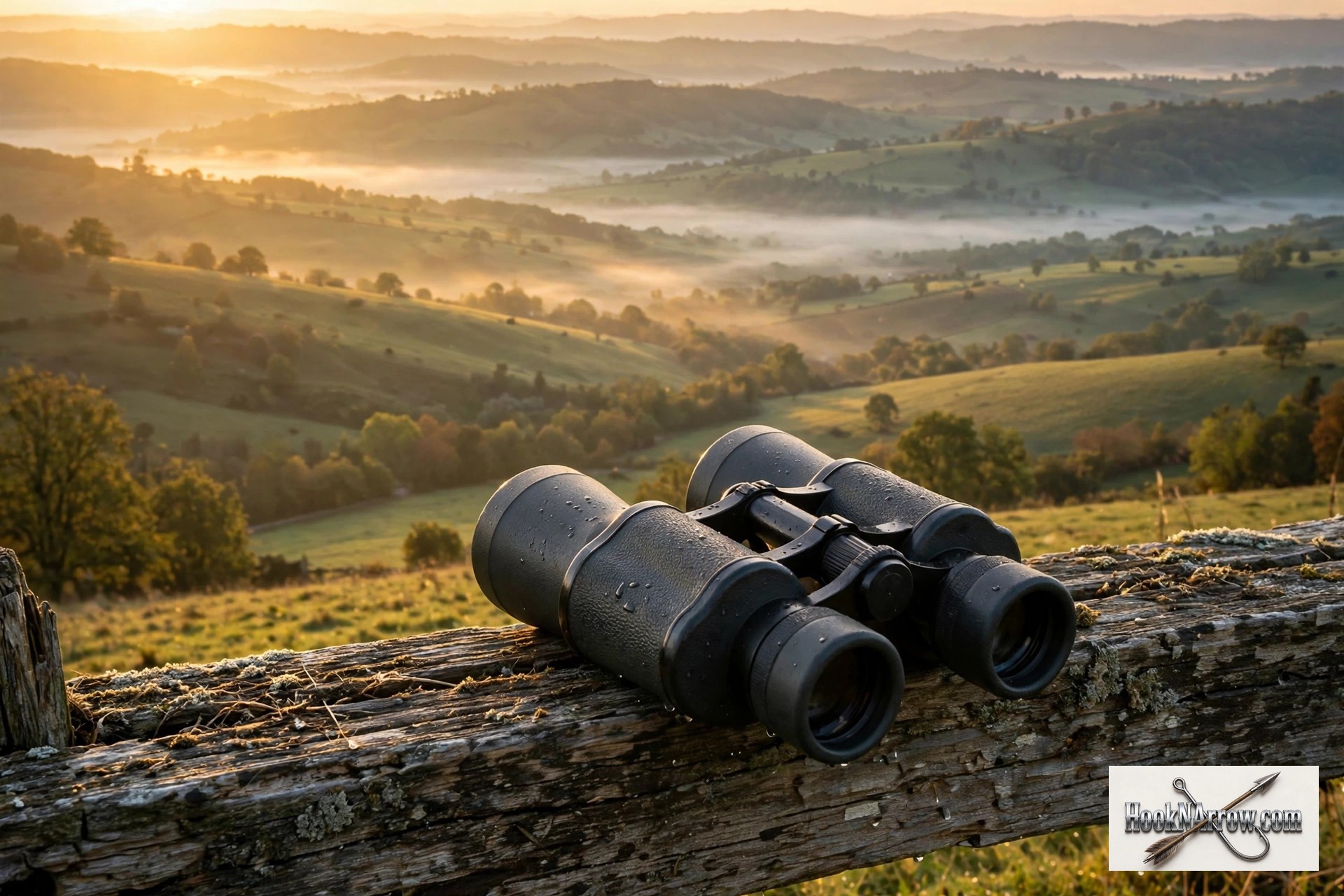
Texas is not one kind of hunting country. The binoculars that earn their keep glassing a South Texas sendero at last light are the same ones you want in a Hill Country blind at 6:40 on a November morning — bright, clear glass that works in the ten minutes before sunrise and the ten after sunset, because that’s when Texas whitetail move, and tough enough to ride in a truck and survive a drop on caliche.
As an Amazon Associate I earn from qualifying purchases.
Binoculars are a buy-once purchase. A cheap pair with foggy edges will teach you the lesson fast the first time a buck steps out at the far end of a sendero in gray light and all you see is a blur with antlers. You don’t need the most expensive glass on the shelf, but you do need honest optics from a company that stands behind them.
What to Look For
Magnification: 8x vs. 10x. This is the first decision, and it’s worth getting right. An 8×42 is the all-around Texas hunting binocular. At 8x, the image is steadier in your hands, the field of view is wider (easier to find a moving deer), and it gathers light better in low light. A 10×42 shows more detail — counting tines across a South Texas pasture, for example — but it magnifies your hand shake too, and the view is dimmer at dawn and dusk. If you hunt mostly from a box blind with a rest or a tripod, 10x is fine. If you still-hunt, walk ridges, or glass freehand in the Hill Country, 8x is the smarter pick. For most Texas hunters, 8×42 is the default answer.
Objective lens size (the “42”). The second number is the diameter of the front lens in millimeters. Forty-two millimeters is the sweet spot for hunting: enough light for dawn and dusk without the bulk of a 50mm. Smaller objectives like 32mm or 28mm make a lighter, more packable binocular, but they give up real performance in low light — exactly when you need it most in Texas. If you hunt from a stand and don’t walk far, a 10×50 is a legitimate low-light machine. If you carry them all day, 8×42 wins on the carry-to-brightness tradeoff.
Low-light performance. Texas deer hunting is a low-light sport. Whitetail in the Hill Country and South Texas brush move hardest in the first and last half hour of legal light. What matters here is lens coatings and glass quality, not just the numbers on the barrel. Good fully multi-coated optics with extra-low-dispersion (ED) glass will show you antler detail in gray light when cheap glass shows a brown blob. You can’t judge this from specs alone — it tracks closely with the reputation of the binocular and what you pay — but ED or HD glass in the name is a meaningful signal.
Weight. You’ll feel every extra ounce on a long morning glassing the Panhandle breaks or walking a sendero. Most 8x42s land between about 22 and 26 ounces. If you hunt from a blind, weight barely matters. If you’re a spot-and-stalk hunter or you glass for hours, a lighter pair around the low-20s pays for itself in comfort. Check the manufacturer’s specs for exact weight before you buy.
Fogproof and waterproof. Non-negotiable in Texas. Morning dew on the coast, a sudden Hill Country rainstorm, temperature swings from a cold truck to a warm blind — binoculars that aren’t nitrogen-purged and sealed will fog from the inside, and once that happens, they’re useless until they dry out. Every binocular on this list is waterproof and fogproof. Also look at the eye relief if you wear glasses: you want at least around 15mm so you can see the full field with your glasses on.
Warranty. Binoculars live hard lives — truck seats, boat decks, blind windows, one memorable drop onto rock. Companies like Vortex and Leupold have strong, hunter-friendly warranty reputations. A good warranty turns a dropped binocular from a financial event into an inconvenience.
The Picks
Vortex Diamondback HD 8×42 — the default answer
Who it’s for: The Texas hunter who wants one pair of binoculars that does everything well — Hill Country whitetail, South Texas brush, the occasional coastal duck trip — without paying premium-glass prices.
Pros: HD optical system that’s genuinely bright in low light for its price; wide field of view; solid build; Vortex’s warranty is famous for a reason. The 8×42 holds steady freehand, and the focus wheel is smooth even with gloves.
Cons: Heavier than some competitors; at last legal light it won’t hang with glass costing two or three times as much — that’s physics, not a flaw. The included strap and case are serviceable, so budget for a harness if you carry them all day.
Purchase this item on Amazon →
Leupold BX-4 Pro Guide HD 8×42 — the step up
Who it’s for: The hunter who wants noticeably better low-light clarity than the mid-range and is willing to pay for it — especially if you hunt a lot of dawn and dusk from a blind in the Hill Country or South Texas.
Pros: Excellent light transmission for the money; Leupold’s Twilight Light Management System is tuned for exactly the low-light conditions Texas deer move in; rugged magnesium body; generous eye relief for glasses wearers.
Cons: Costs meaningfully more than the Diamondback HD; the 10×42 version magnifies hand shake, so pick your magnification honestly.
Vortex Viper HD 8×42 — the sweet spot hunter
Who it’s for: The hunter who spends a lot of mornings behind glass — serious Hill Country lease members, guys who glass mule deer in the Panhandle, anyone who wants near-premium optics without the premium badge price.
Pros: A genuine step up in glass over the Diamondback HD — sharper edges, better low-light performance, excellent color; same no-questions warranty; compact for its class.
Cons: A real premium over the Diamondback; the focus wheel feels a touch fast to some; like everything good, it’s a theft magnet in a truck cab — don’t leave them visible.
Purchase this item on Amazon →
Bushnell Engage DX 8×42 — the budget-friendly workhorse
Who it’s for: The hunter on a budget who still refuses to buy junk — first lease, young hunter, or a second pair to live permanently in the truck.
Pros: ED glass at a price that used to be impossible; fully multi-coated optics that punch above their weight at dawn and dusk; locking diopter so your setting doesn’t drift.
Cons: Fit and finish isn’t at the Vortex/Leupold level; the warranty is good but not legendary; low-light performance is a notch below the mid-range picks above. Check current availability — Bushnell refreshes this line periodically.
Zeiss Terra ED 8×42 — the European glass entry
Who it’s for: The optics snob on a budget — the hunter who wants the Zeiss name and genuinely excellent glass without stepping into the price range of Zeiss’s flagship lines.
Pros: Outstanding clarity and color fidelity; compact and light for an 8×42; Zeiss coatings handle glare well — useful when you’re glassing toward a Texas sunrise or sunset; hydrophobic lens coating sheds dew and light rain.
Cons: The narrowest field of view among the picks here, which can make finding a moving animal harder; pricier than the Diamondback HD for comparable field performance; the focus wheel has a longer throw that takes getting used to.
Purchase this item on Amazon →
Nikon Monarch M5 8×42 — the lightweight carry
Who it’s for: The walk-all-day hunter — Panhandle mule deer, Hill Country ridge walking, anyone who counts ounces.
Pros: ED glass with good low-light performance; one of the lighter 8x42s you’ll find, and you feel it on a long day; smooth, precise focus; Nikon’s optics in this line have a long, earned reputation with birders and hunters alike.
Cons: Nikon has scaled back its sport optics support compared to the dedicated hunting brands — check the current warranty terms before buying; eye cups on some units feel a little stiff.
Purchase this item on Amazon →
Practical Tips for Texas
Use a harness, not the neck strap. If you carry binoculars for more than an hour, a simple chest harness changes everything. The binoculars ride tight against your chest, don’t bounce when you walk a sendero, and don’t swing into the blind window when you lean. This is a $20–$40 purchase that matters more than agonizing between two similar pairs.
Keep them in the blind, not the truck. Texas heat is the enemy of everything, including optics. Sealed, nitrogen-purged binoculars survive heat fine, but the lubricants and adhesives last longer if you’re not baking them on a dashboard all summer.
Glass in the gray light, not the dark. Here’s a field habit worth building: at dawn, start glassing sendero edges and pasture rims about 20 minutes before you can clearly see. Your good binoculars will resolve a deer’s body in gray light long before your naked eye can. That’s the entire point of paying for quality glass — the last ten minutes of the evening and the first ten of the morning are when the biggest bucks in Texas move, and cheap glass goes blind exactly then.
Protect the objective lenses. Dust on South Texas dirt roads and salt spray on the coast will etch lens coatings over time. Keep the covers on when you’re not glassing, and clean with a lens pen or a microfiber cloth — never your shirttail, which grinds grit into the coating.
FAQ
Is 8x or 10x better for Texas whitetail hunting? For most Texas whitetail hunting, 8×42. It’s brighter in low light, steadier in your hands, and gives a wider view — all of which matter more than extra magnification when glassing freehand. Go 10x only if you hunt mostly from a stable rest and glass long distances across open country.
Do I really need waterproof and fogproof binoculars in Texas? Yes. Coastal humidity, Hill Country morning dew, surprise thunderstorms, and the temperature swing from an air-conditioned truck to a 100-degree sendero will fog cheap optics from the inside. Every serious hunting binocular is nitrogen-purged and sealed — treat that as a minimum requirement, not a feature.
How much should I spend on hunting binoculars? The honest answer: the mid-range picks on this list (roughly the Diamondback HD / Engage DX class and up) are where you stop getting what you pay for and start paying for the badge. Below that tier, low-light performance falls off fast. If you hunt a handful of mornings a year, the budget tier is fine. If you’re on a lease all season, spend up one tier — you’ll glass with them for a decade.
What’s the deal with the Vortex warranty? Vortex’s warranty is one of the best-known in the optics world: they repair or replace damaged binoculars with very few questions asked, and it’s fully transferable — it covers the product, not the original buyer. That’s worth real money over the life of a pair of binoculars that get used hard.
Keep Reading: More Buying Guides
More Hunting Gear Guides
- Best Trail Cameras for Whitetail Deer 2026
- Best Hunting Knives for Deer & Hog Hunting (2026)
- Best Deer Hunting Scopes 2026
- Best Thermal Scopes for Hog & Predator Hunting (2026 Guide)
- Best Bear Hunting Gear 2026
- Best Elk Hunting Gear 2026
- Best Mountain Lion Hunting Gear 2026
Leave a Reply