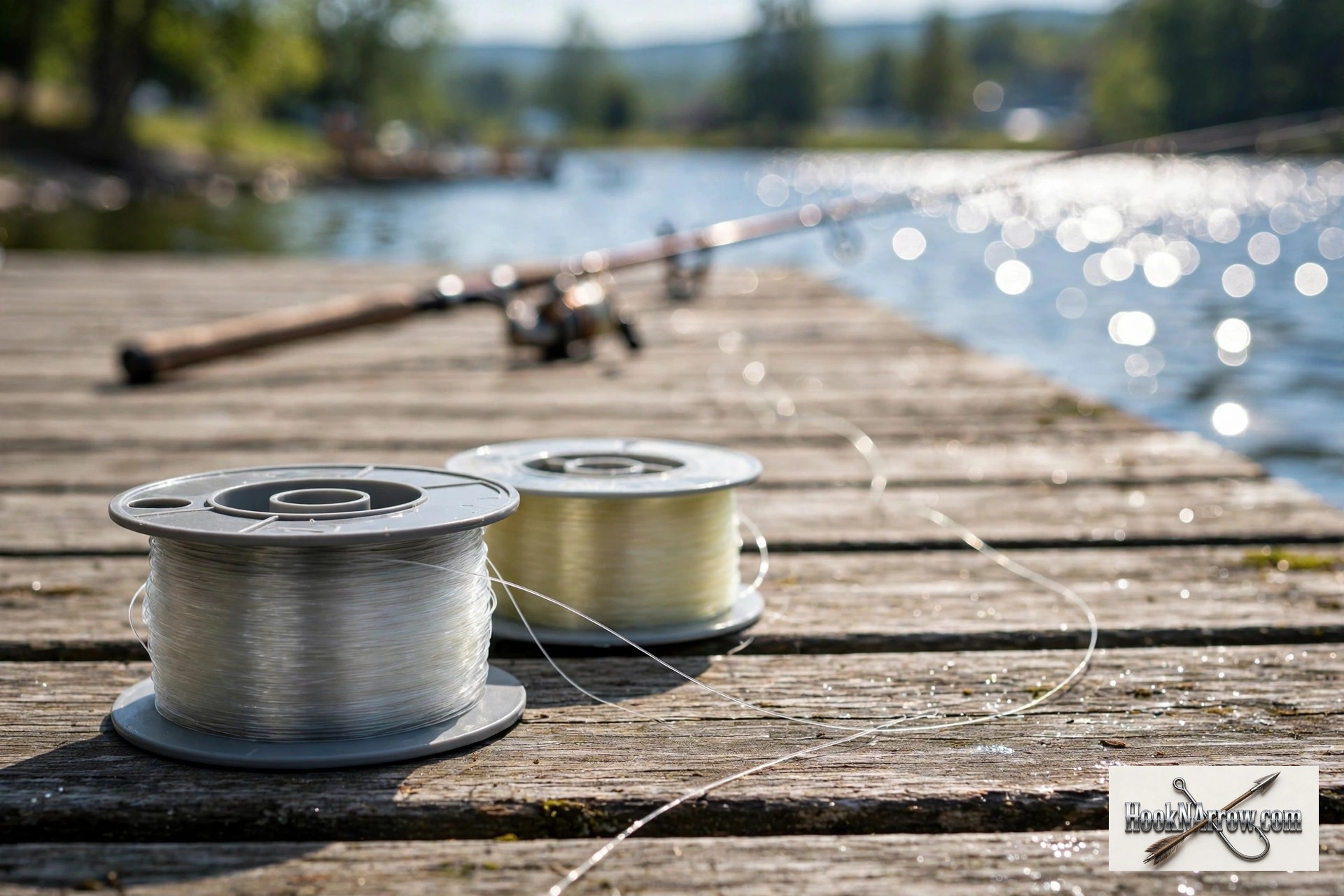
Ask ten Texas bass anglers what line they use and you’ll get eleven answers, all delivered with total confidence. Here’s the truth: there is no single best bass fishing line. There are three kinds — monofilament, fluorocarbon, and braid — and each one is the right answer for certain techniques on certain Texas waters. The angler who wins your local Tuesday nighter on Lake Fork isn’t using one line for everything; he’s using braid for flipping the grass, fluorocarbon for cranking the ledges, and monofilament for topwater.
As an Amazon Associate I earn from qualifying purchases.
This guide explains what each line type actually does, when to reach for it on Texas bass fisheries, and which specific lines have earned their reputations. No hype, no brand worship — just what works and why.
What to Look For
Line type first, brand second. The type matters far more than the label on the spool. Monofilament floats, stretches, and is forgiving and cheap. Fluorocarbon sinks, stretches less, and is nearly invisible underwater. Braid doesn’t stretch, is the thinnest and strongest for its diameter, and is highly visible without a leader. Every technique decision starts here.
Pound-test and diameter. Pound-test is breaking strength; diameter is thickness. Braid at 30-pound test is roughly the diameter of 8-pound mono — which is why braid casts far and cuts through grass. For Texas bass: 12–17 lb for most fluorocarbon, 30–65 lb for braid (heavier for flipping thick cover), 10–20 lb for mono. Match the line to the cover, not the fish — a 5-pounder in open water is nothing; a 5-pounder buried in Fork hydrilla is a tow truck job.
Stretch. Stretch is a feature, not a flaw. Mono’s stretch acts like a shock absorber: it keeps treble hooks from tearing out on a crankbait bite. Braid’s zero stretch means instant hooksets at the end of a long cast and total feel — critical for flipping and frogging. Fluorocarbon sits in the middle: less stretch than mono, enough sensitivity to feel a deep crankbait ticking a stump on Toledo Bend.
Visibility. In clear water — the Highland Lakes, Amistad, spring-fed Hill Country rivers — line-shy bass refuse a bait tied to thick, visible line. Fluorocarbon’s refractive index is close to water’s, making it the hardest line for fish to see. Braid is the most visible, which is why braid users tie on a fluorocarbon leader in clear water. In stained East Texas water, visibility matters much less.
Abrasion resistance. Texas bass live in rough stuff: flooded timber on Rayburn, riprap on Texoma, shell beds on Falcon. Fluorocarbon generally handles abrasion best; braid frays on rock and wood; cheap mono nicks easily. If your line comes back fuzzy after fishing timber, that’s the line telling you something.
Memory and manageability. Mono and fluorocarbon both develop “memory” — coils from sitting on the spool — causing tangles and poor casting, especially in heavier tests. Fluorocarbon is stiffer and springier, so it’s more prone to jumping off a spinning reel. Braid has essentially no memory. Re-spool mono and fluoro at least a couple of times a season if you fish regularly.
The Picks
PowerPro Spectra Fiber Braided Line — the braid standard
Who it’s for: Anyone flipping heavy cover, frogging mats, or fishing thick grass — the Lake Fork hydrilla playbook, punching matted vegetation, or dragging a Carolina rig across Rayburn.
Pros: The benchmark braid: incredibly strong for its diameter, zero stretch for instant hooksets, no memory, casts a mile. The Enhanced Body Technology version is rounder and smoother — quieter through the guides, better handling. A spool lasts a long time since braid doesn’t degrade like mono; many anglers just flip it end-for-end after a season.
Cons: Highly visible underwater — tie on a fluorocarbon leader in clear water; it can dig into itself on the spool under heavy drag, so spool it tight; it frays on sharp rock and zebra-mussel shells (Texoma anglers, take note). Also: braid + treble hooks is a bad combination — too little give.
Purchase this item on Amazon →
Seaguar InvizX Fluorocarbon — the clear-water workhorse
Who it’s for: The angler fishing crankbaits, jerkbaits, jigs, and Texas rigs in clear to moderately stained water — Amistad smallmouth country, the Highland Lakes, deep cranking on Toledo Bend.
Pros: Softer and more manageable than most fluorocarbons, so it handles well on casting and spinning reels; excellent knot strength; genuinely low visibility; good sensitivity for feeling deep structure. One of the most forgiving fluorocarbons to fish.
Cons: Pricier than mono — filling a deep-cranking reel adds up; still has more memory than braid; fluorocarbon knots must be tied carefully and cinched slowly with a wet line. Not the best choice for heavy-cover flipping, where braid’s brute strength wins.
Purchase this item on Amazon →
Seaguar AbrazX Fluorocarbon — the cover fluoro
Who it’s for: Anglers who want fluorocarbon’s invisibility and sensitivity but fish it around abrasive cover — flooded timber on Sam Rayburn, brush piles on Fork, dock pilings.
Pros: Built for abrasion resistance — tougher against wood, rock, and concrete than standard fluoro; still low-visibility and sinking; strong knot strength. The fluoro to reach for when fishing a jig or Texas rig through timber.
Cons: Stiffer than InvizX — better on casting reels than spinning gear; a real price premium; demands careful knot tying like all fluoro. Overkill for open-water cranking.
Berkley Trilene Big Game Monofilament — the mono that won’t die
Who it’s for: Topwater anglers, crankbait fishermen, catfish-and-bass generalists, and anyone who wants a cheap, tough, forgiving line — plus everyone who should keep a spool of mono around for leaders and backup.
Pros: Big Game is famously tough and abrasion-resistant for a mono; it floats, making it the natural choice for topwater — poppers, walking baits, buzzbaits — where you don’t want line dragging the nose down; the stretch is forgiving with treble hooks; and it’s cheap enough that re-spooling often doesn’t hurt.
Cons: Lots of stretch — poor for techniques needing instant hooksets or bottom feel; thicker per pound-test than fluoro or braid; degrades in UV, so Texas sun shortens its life — re-spool regularly. Not invisible by any stretch.
Purchase this item on Amazon →
SpiderWire Stealth Braid — the smooth-casting braid
Who it’s for: Anglers who want braid’s strength and sensitivity with quieter, smoother casting — frogging, pitching, and spinning-reel finesse applications.
Pros: The fluoropolymer-treated coating makes it cast smoother and quieter through guides than raw-feeling braids; strong and thin; the color options blend into stained water better than hi-vis braids; a good choice for spinning reels where line management matters.
Cons: The coating wears with use — it gets fuzzier and louder over time; like all braids, it’s visible to fish in clear water without a leader; it can slip on the spool arbor without backing or tape. Some anglers find the color fades faster than PowerPro.
Purchase this item on Amazon →
Sufix 832 Advanced Superline — the premium braid
Who it’s for: The angler who fishes braid hard and often — tournament anglers, guides, anyone who wants the toughest, longest-lasting braid and is willing to pay for it.
Pros: Eight-carrier construction (seven HMPE fibers plus one GORE performance fiber) makes it rounder, quieter, and more abrasion-resistant than standard four-carrier braids; excellent castability; holds up around timber, shell, and riprap.
Cons: The most expensive braid on this list by a clear margin — overkill if you fish braid occasionally; still needs a leader in clear water; still zero stretch, so keep it away from treble-hook baits.
Purchase this item on Amazon →
When to Use Each: Texas Techniques
Flipping and pitching heavy cover (Fork grass, Rayburn timber): Braid, 50–65 lb. Zero stretch drives the hook home and hauls fish out of hydrilla before they bury you. This is braid’s home turf.
Frogging mats: Braid, 50–65 lb. You need to move a fish’s head the instant it blows up on a frog in matted vegetation.
Deep cranking (Toledo Bend ledges, Texoma humps): Fluorocarbon, 10–14 lb. Fluoro sinks, getting the bait deeper; low stretch transmits the feel of the bait ticking cover.
Jigs and Texas rigs around wood: Fluorocarbon, 15–20 lb (AbrazX if the cover is nasty). Sensitivity, invisibility, abrasion resistance against timber.
Topwater (dawn on Fork, schooling fish on Rayburn): Monofilament, 12–17 lb. It floats, keeping walking baits working correctly, and the stretch keeps treble hooks pinned.
Finesse in clear water (Highland Lakes, Amistad): Braid mainline (10–15 lb) to a fluorocarbon leader (6–10 lb) on spinning gear. Braid’s castability and feel with fluoro’s invisibility at the business end.
Crankbaits with treble hooks: Monofilament or fluorocarbon, 10–14 lb — never straight braid. Treble hooks need some give or they tear out.
Practical Tips for Texas
Re-spool before the spawn, not during it. Texas bass spawn roughly February through April depending on the lake. Old, nicked, sun-baked line is how you lose the biggest fish of your year. Fresh mono and fluorocarbon at the start of prespawn is cheap insurance.
Texas heat kills monofilament. UV and heat degrade mono fast. Line left baking in a rod locker or on a boat deck all summer loses strength — if your mono is a season old and lived in the heat, don’t trust it on a fish that matters.
Wet your fluorocarbon knots. Fluoro generates heat when a knot cinches, and heat weakens it. Spit on it, pull it tight slowly, and use knots fluoro likes — the Palomar or the San Diego jam. Test every knot with a firm pull before you cast.
Use backing under braid. Braid is slick — it will slip around the spool arbor under load. A few wraps of mono backing or a strip of electrical tape locks it down.
Leaders are not optional in clear water. Throwing braid on Amistad or the Highland Lakes? Tie on 6–10 feet of fluorocarbon with an FG or Alberto knot. In stained East Texas water, straight braid usually gets away with it.
FAQ
Can I just use one line for all my bass fishing? You can, and plenty of weekend anglers do — 12–15 lb fluorocarbon or 30 lb braid covers the most ground if you must pick one. But you’ll compromise everywhere: braid costs you bites in clear water and pulls trebles, fluoro costs you hooksetting power in heavy grass, mono costs you sensitivity deep. Two setups — one braid, one fluoro — covers 90% of Texas bass fishing.
How often should I re-spool? Mono: every few months if you fish regularly, more often in Texas heat and sun. Fluorocarbon: two to three times a season; check for nicks after every trip around timber. Braid: once a season or less — inspect the working end and trim frayed sections. Line is the cheapest part of the system and the only part touching the fish.
Why does my fluorocarbon keep breaking at the knot? Almost always one of three things: you cinched it dry and fast (heat damage), you used a knot that doesn’t suit fluoro, or the line is old or nicked. Wet every knot, cinch slowly, use a Palomar or San Diego jam, and retie after every fish or snag.
Keep Reading: More Buying Guides
More Hunting Gear Guides
- Best Trail Cameras for Whitetail Deer 2026
- Best Hunting Knives for Deer & Hog Hunting (2026)
- Best Deer Hunting Scopes 2026
- Best Binoculars for Hunting 2026
- Best Thermal Scopes for Hog & Predator Hunting (2026 Guide)
- Best Bear Hunting Gear 2026
- Best Elk Hunting Gear 2026
- Best Mountain Lion Hunting Gear 2026
Leave a Reply