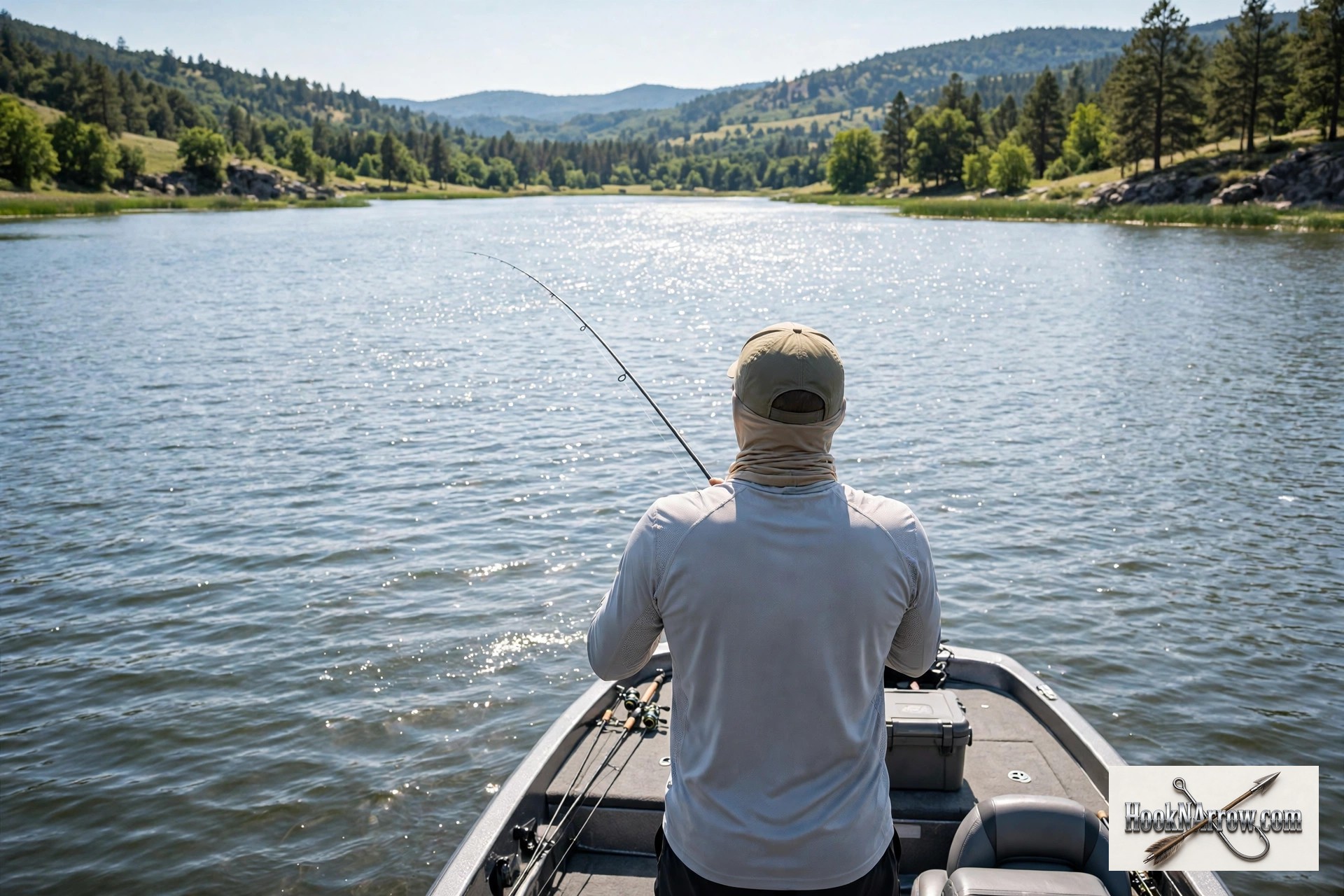
A July afternoon on Toledo Bend or Lake Texoma is a special kind of punishment — 102 degrees, sun bouncing off the water from below, not a cloud in the sky, and humidity thick enough to chew if you’re anywhere near the coast. Texas doesn’t do mild summers, and an eight-hour day on the water here will cook you if you dress for it wrong.
As an Amazon Associate I earn from qualifying purchases.
The old-timers had it right even if they didn’t have the fabrics: cover up. The guys who last all day in August aren’t the ones in tank tops — they’re in long sleeves, a hat, and a neck gaiter, fishing comfortably while the sunburned crowd quits at noon. Modern fishing apparel just does it better, with lightweight fabrics that block UV, vent heat, and dry fast when you take a wave over the bow.
This guide covers what actually works for Texas heat: UPF sun shirts, ventilated pants and shorts, hats, neck gaiters, polarized sunglasses, sun gloves, and rain gear for those Gulf pop-up storms that go from blue sky to sideways rain in twenty minutes.
What to Look For in Hot-Weather Fishing Apparel
UPF rating. UPF 50 is the standard you want — it blocks about 98% of UV rays. Unlike sunscreen, it doesn’t sweat off, wear off, or need reapplying. A UPF 50 long-sleeve shirt is the single best piece of sun protection you can own.
Ventilation. Look for mesh panels under the arms, vented back capes (the classic Columbia PFG back vent), and lightweight weaves. Airflow is what keeps a long-sleeve shirt cooler than bare skin in 100-degree heat.
Fabric. Lightweight synthetics (polyester blends) wick sweat and dry fast. Cotton is the enemy on a Texas summer day — it soaks up sweat, stays wet, and gets heavy. Save the cotton for October.
Fit. Loose is cooler than tight. A relaxed fit lets air move between the fabric and your skin, which is the whole point of the shirt.
Coverage. Long sleeves, a collar or hood, a neck gaiter, and sun gloves cover the spots that burn: the back of the neck, the ears, the tops of the hands. These are the places Texas anglers collect skin damage year after year.
Polarized sunglasses. Polarization cuts surface glare so you can see into the water — bedding bass, cruising reds, shallow crappie. For Texas freshwater, copper or amber lenses are the versatile choice; they boost contrast in our typically stained water.
Rain gear. From April through October, a pop-up storm can roll off the Gulf with almost no warning. A packable rain shell lives in the boat, not the garage.
The Picks
1. Huk Pursuit Long Sleeve — Best Everyday Sun Shirt
Who it’s for: The angler who wants one shirt for everything — bass fishing at Fork, bay trips to Galveston, crappie mornings at Tawakoni.
PROS: Lightweight, breathable, UPF-rated, and Huk has been making fishing-specific shirts long enough to get the details right — vented, quick-dry, and comfortable for a full day. The Pursuit line is their bread and butter for a reason.
CONS: Like all polyester performance shirts, it can hold odor after a few sweaty days — wash it, don’t just hang it back up. The athletic fit runs snug; size up if you want airflow.
Purchase this item on Amazon →
2. Columbia PFG Tamiami II — Best Vented Shirt
Who it’s for: The angler who runs hot and wants maximum airflow — or anyone who likes the classic vented fishing shirt look.
PROS: The Tamiami II’s mesh-lined vent across the back is a classic for a reason: air moves through it. Solid UPF sun protection (check the tag on the current version), lightweight, and the relaxed fit is comfortable on bigger frames.
CONS: It’s a boxier, more traditional cut — less stretch and athletic feel than the performance brands. The lighter colors show fish slime and sunscreen stains, so don’t wear white if you’re handling catfish.
Purchase this item on Amazon →
3. Simms SolarFlex Hoody — Best Hooded Sun Shirt
Who it’s for: Anyone who’s ever burned the back of their neck and ears on a long summer day — which is every Texas angler, eventually.
PROS: The built-in hood is the whole point: pull it up and your neck, ears, and the sides of your face are covered without a separate gaiter. Simms builds it light with thumb loops and solid UPF protection, and the hoody style has become the go-to for guides who live in the sun.
CONS: A hood can feel warm when the air is dead still — it shines once there’s a breeze or you’re running the boat. And it’s a distinctive look; you’ll either love it or you won’t.
4. Costa Del Mar Fantail — Best Polarized Sunglasses
Who it’s for: The serious angler who wants the best lens on the water and fishes enough to justify it.
PROS: Costa’s 580 lenses are genuinely excellent at cutting glare and boosting contrast — you’ll see fish and structure you flat-out couldn’t see before. The Fantail frame gives good side coverage, which matters when the Texas sun is bouncing off the water from every angle.
CONS: This is premium eyewear pricing, not gas-station shades. And expensive sunglasses and boat decks have a tragic relationship — buy a floating retainer and actually wear it.
Purchase this item on Amazon →
5. Buff UV Multifunctional Headwear — Best Neck Gaiter
Who it’s for: Everyone fishing Texas from May to September. This is the cheapest meaningful upgrade on this list.
PROS: One piece of stretchy fabric that covers your neck, ears, and face from the sun — pull it up over your nose on a long boat run and you’ll wonder how you fished without it. UPF-rated, breathable, and it doubles as a headband, hat liner, or face covering. Dunk it in the lake and it’s instant evaporative air conditioning.
CONS: In dead-still 105-degree air, anything on your face feels warm until you wet it down. Keep it damp and it’s fine.
Purchase this item on Amazon →
6. Frogg Toggs Rain Suit — Best Budget Rain Gear
Who it’s for: The angler who needs rain protection in the boat without spending real money — which, for a pop-up storm shell, is most of us.
PROS: Ultralight, packable, and cheap enough that you won’t cry when a treble hook finds it. It keeps you dry through a Gulf pop-up storm, and the whole suit packs down small enough to live in a boat compartment year-round.
CONS: It’s not built for daily abuse — brush against enough dock pilings and it’ll tear. And it’s not breathable like premium rain gear, so you’ll be damp from sweat in a long downpour. For Texas pop-up storms, that’s an acceptable trade.
Purchase this item on Amazon →
Tips: Beating the Texas Heat
Fish early, quit early. In July and August, the bite and the bearable temperatures both live in the first four hours of daylight. Launch at first light, be off the water by 1 or 2 PM, and you’ll catch more fish and feel human doing it.
Cover up — long sleeves are cooler. It sounds backwards until you try it. A UPF long-sleeve shirt blocks direct sun, and if it’s vented and loose, the airflow underneath keeps you cooler than bare, sun-baked skin. The sunburned guy in the tank top is the one overheating.
Wet the gaiter. A neck gaiter dunked in the lake is the poor man’s air conditioner. Evaporative cooling on your neck and face takes the edge off the worst afternoon heat — re-wet it every hour or so.
Keep rain gear in the boat, always. Gulf pop-up storms don’t care about your morning radar check. April through October, a packable shell lives in the boat — getting caught in sideways rain with no shell ends your day and soaks everything you own.
Protect the forgotten spots. Back of the neck, ears, tops of the hands, lips. These are where Texas anglers collect sun damage over the years. A hoody or gaiter, sun gloves, and lip balm with SPF close the gaps your shirt doesn’t cover.
Hydrate like it’s your job. A gallon of water per person for a summer day isn’t overkill. Start hydrating the night before, and don’t wait until you’re thirsty — on the water in August, thirst means you’re already behind.
FAQ
Is UPF clothing enough, or do I still need sunscreen? Both. UPF clothing covers what it covers perfectly, but your face, hands, and anything the shirt doesn’t reach still need sunscreen. Think of the shirt as your base layer of protection, not the whole plan.
Really — long sleeves in 100-degree heat? Really. Direct sun on bare skin heats you up faster than a loose, vented long-sleeve shirt does. The key is lightweight, breathable fabric and a relaxed fit — not a heavy cotton long-sleeve.
What sunglass lens color works best for Texas water? Copper or amber for most Texas freshwater — they boost contrast in our typically stained or green water. Gray is better for bright offshore or bluebird saltwater days. If you only own one pair, make it copper.
Cotton or synthetic for summer fishing? Synthetic, no contest. Cotton holds sweat and stays wet; performance synthetics wick it away and dry fast. The only thing cotton has going for it is the price tag.
Do I need rain gear if I check the radar before launching? Yes. Texas pop-up storms — especially along the coast and in East Texas — can build in under an hour. A packable rain shell weighs nothing and has saved more fishing days than any lure ever made.
Keep Reading: More Buying Guides
More Hunting Gear Guides
- Best Trail Cameras for Whitetail Deer 2026
- Best Hunting Knives for Deer & Hog Hunting (2026)
- Best Deer Hunting Scopes 2026
- Best Binoculars for Hunting 2026
- Best Thermal Scopes for Hog & Predator Hunting (2026 Guide)
- Best Bear Hunting Gear 2026
- Best Elk Hunting Gear 2026
- Best Mountain Lion Hunting Gear 2026
Leave a Reply