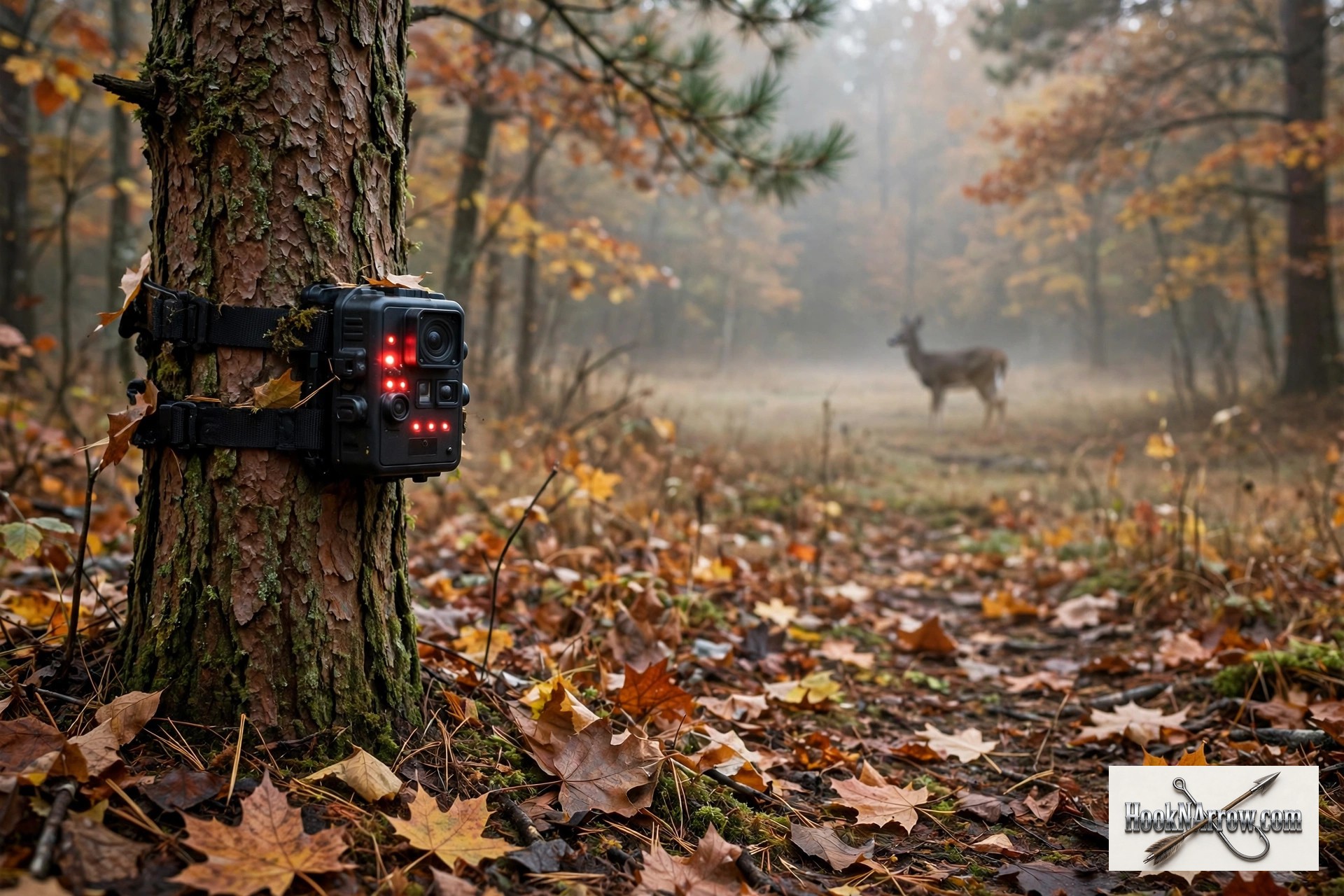
If you hunt deer in Texas, you already know: a trail camera isn’t a luxury, it’s how you hunt. Most of us lease land we can only visit on weekends, and the older bucks pattern around daylight like it’s their job. A good camera over a feeder, on a sendero crossing, or in a brush-country travel corridor tells you what’s actually out there so you’re not burning Saturday mornings guessing.
As an Amazon Associate I earn from qualifying purchases.
Texas is also hard on cameras. Summer heat cooks batteries, humidity fogs lenses, and hogs will knock a camera off a tree just for the fun of it. So let’s talk about what actually matters for whitetail down here, and which cameras make sense.
One honest note: the deer don’t care about brand names. What matters is trigger speed, detection range, flash type, and whether the thing stays alive for months in 100-degree heat. Buy for the specs that matter on your lease, not the box art.
What to Look For
Trigger speed. This is how fast the camera fires after the sensor detects motion. Under half a second is good; a full second or more means you’re getting pictures of deer butts — or empty lanes where a buck just was. On a feeder where deer stand still, speed matters less. On a sendero or game trail where they’re walking through, it matters a lot.
Detection range. How far out the motion sensor picks up a deer — often 60 to 100 feet. In open South Texas senderos, longer range is genuinely useful. In thick Piney Woods brush where visibility is 30 yards anyway, it matters less.
No-glow vs. low-glow flash. Infrared flash lets the camera shoot at night without a white flash. Low-glow uses a dim red glow that deer can sometimes see — most ignore it, but a few pressured bucks spook from it. No-glow (black flash) uses invisible infrared LEDs. Night photos tend to be grainier and shorter-range, but mature bucks on a pressured lease are far less likely to notice it. If you’re hunting a public spot or a small lease where every deer gets educated fast, no-glow is worth the tradeoff in image quality.
Cellular vs. traditional. A cellular camera sends photos to your phone over the cell network. That means you can check your lease camera from your couch in Longview on a Tuesday night and decide whether to drive out Friday. The honest tradeoff: cell cameras need a signal (check your carrier coverage at the lease, not at the house), and the data plans cost money — typically a monthly or seasonal subscription per camera. If you run six cameras, that adds up. Traditional SD-card cameras cost nothing to run after purchase, but you have to walk in to pull cards — disturbing the area and learning what happened weeks ago.
Battery life. Texas heat kills batteries. Alkaline AAs sag fast in summer; lithium AAs handle heat much better and last dramatically longer. Solar panels help on cell cams that otherwise chew through batteries sending photos. Whatever you buy, budget for lithium batteries if it’s sitting out from July through January.
Build and weather sealing. Look for decent weather resistance — Texas throws dust storms, frog-drowners, and humidity at cameras in the same week. A flimsy latch door that leaks will ruin a camera in one wet season.
Our Picks
Tactacam Reveal X 2.0 — best all-around cell camera for a lease
Who it’s for: The weekend hunter who wants photos on the phone without driving three hours to pull a card.
The Reveal line basically owns the cellular trail camera market right now, and the X 2.0 is the sweet spot of the lineup. It’s a no-glow camera, so night shots won’t flare a mature buck, and the app is genuinely easy to use.
Pros: Reliable no-glow night photos; straightforward app and setup; good battery efficiency for a cell cam; works on major carriers (check coverage at your lease).
Cons: The data plan is a recurring cost per camera — painful if you run a bunch of them; night image quality is typical no-glow (fine for identifying bucks, not magazine material); you’ll want lithium batteries for Texas summer, which aren’t cheap.
Purchase this item on Amazon →
Moultrie Mobile Edge — best for long sits in brutal heat
Who it’s for: Hunters who want to hang a camera in August and not touch it until Thanksgiving.
Moultrie has been making trail cameras forever, and the Mobile Edge is their modern cellular flagship. It’s built to sip power, and with a solar panel it can genuinely run for months. Moultrie Mobile’s plan tiers are competitive, and the Edge’s detection is strong on open feeder setups.
Pros: Excellent battery endurance, especially paired with a solar panel; strong detection range for open-country setups; solid app with map and weather features.
Cons: Cell plan required like all cell cams; the camera is bulkier than some competitors; low-light night detail is good but not class-leading.
Purchase this item on Amazon →
Browning Strike Force HD Pro X — best traditional (non-cell) camera
Who it’s for: The hunter who wants zero monthly fees and doesn’t mind pulling cards.
Browning’s Strike Force series has been a trail-camera workhorse for years, and for good reason: fast trigger speed, excellent image quality day and night, and rugged housings that take abuse. If your lease is close enough that you’ll check cameras regularly anyway, or you just don’t want another subscription, this is the classic choice. Browning also makes the Dark Ops line in no-glow if pressured bucks are your concern — same quality, invisible flash.
Pros: Outstanding trigger speed and photo quality for the money; no subscription — buy it once; tough housings that survive hog country; compact size hides well on a trail.
Cons: No remote viewing — you’re driving to pull cards; night range on the no-glow Dark Ops version is shorter, as with all no-glow cams.
Stealth Cam DS4K Transmit — best if you want 4K detail
Who it’s for: The hunter who zooms in on antler tines and wants maximum image detail.
The DS4K line shoots ultra-high-resolution video and photos — when you want to really study a buck’s rack, the detail is legitimately impressive. The Transmit version adds cellular, so you get those crisp images on your phone.
Pros: Exceptional image and video resolution; good value on the hardware itself.
Cons: 4K files are big — they eat battery and data faster than standard-res cameras; trigger speed is a step behind Browning at the same price; sophisticated electronics like shade in Texas heat.
Spypoint Flex — best budget cellular option
Who it’s for: Running multiple cameras across a big lease without going broke on hardware.
The Flex is one of the cheapest ways into cellular trail cameras. It sends photos to the Spypoint app, and the free-tier plan (a small number of photos per month) can actually work for a camera on a quiet spot — though you’ll likely want a paid plan on a busy feeder. Image quality is serviceable: good enough to count points and recognize individual bucks.
Pros: Low upfront cost; flexible plan tiers including a limited free option; compact and easy to hang; dual-carrier options on some versions.
Cons: Photo quality and trigger speed are a step down from the premium picks; the free plan runs out fast on an active feeder; build quality feels budget — mount it where hogs can’t reach it.
Purchase this item on Amazon →
Bushnell CelluCORE 20 — best for hunters who trust the Bushnell name
Who it’s for: The longtime Bushnell optics fan who wants a cell cam that integrates with gear they already own.
Bushnell’s CelluCORE line is a solid mid-pack cellular camera: no-glow flash, respectable trigger speed, and the no-glow night images are among the better ones in the price range. If you’ve run Bushnell binoculars and scopes for years, the ecosystem familiarity is a real plus.
Pros: Good no-glow night performance for the price; straightforward setup; Bushnell’s warranty and support reputation.
Cons: Cell plan cost like all cell cams; the app isn’t as polished as Tactacam’s or Moultrie’s; battery life is average — lithiums recommended in summer.
Purchase this item on Amazon →
Texas Tips That Actually Matter
Mount for hogs, not just deer. Hogs rub on anything, and a camera at chest height on a skinny tree is a target. Hang cameras at least 6–7 feet high, angled down, or mount them on a steel T-post driven deep. A hog-wrecked camera is a Texas rite of passage — try to only pay for it once.
Face cameras north. In Texas sun, an east- or west-facing camera gets blinded at dawn and dusk — exactly when deer move. North-facing keeps the sun out of the lens and gives you cleaner morning and evening shots.
Go no-glow on pressured leases. On a big low-pressure ranch, low-glow is fine. On a 200-acre lease with four hunters where every deer has a story about a red flash, go no-glow for your best spots.
Test cell signal before you buy the plan. Stand where the camera will hang and check your phone’s bars on the carrier the camera uses. A cell camera with no bars is just an expensive SD-card camera.
Run lithiums from June through September. Alkalines will die in a hot Texas summer and you’ll come back to a dead camera and a month of missed pictures. Lithium AAs cost more but last far longer in heat — they pay for themselves in saved trips.
Use cameras to learn, then move them. The classic mistake is hanging a camera on a feeder in July and leaving it there all season. Spend two weeks per spot: pattern the buck, then move the camera to the trail he’s actually using.
FAQ
How many cameras do I need for a Texas lease? Two is the minimum that makes sense: one on the main feeder, one on a trail or crossing. Four to six lets you cover feeders, water, and travel corridors on a typical 200–500 acre lease without much overlap. Start with two good ones rather than six cheap ones.
Are cellular cameras worth the monthly cost? If your lease is more than an hour away, yes — one saved trip pays for months of plans. If you hunt behind your house and check cameras on the way to the stand anyway, traditional SD-card cameras save you real money.
Will a trail camera spook a mature buck? It can. The flash is the main culprit — use no-glow on your best spots. Also avoid walking straight to the camera every week; check it on your way to or from the stand, downwind, and don’t linger.
How do I keep cameras from getting stolen? Lock boxes and cable locks are the minimum — most cameras in this guide fit standard lock boxes. Hang cameras high and off obvious trails. Cellular cameras at least send you the thief’s photo.
Keep Reading: More Buying Guides
More Hunting Gear Guides
- Best Hunting Knives for Deer & Hog Hunting (2026)
- Best Deer Hunting Scopes 2026
- Best Binoculars for Hunting 2026
- Best Thermal Scopes for Hog & Predator Hunting (2026 Guide)
- Best Bear Hunting Gear 2026
- Best Elk Hunting Gear 2026
- Best Mountain Lion Hunting Gear 2026
Leave a Reply