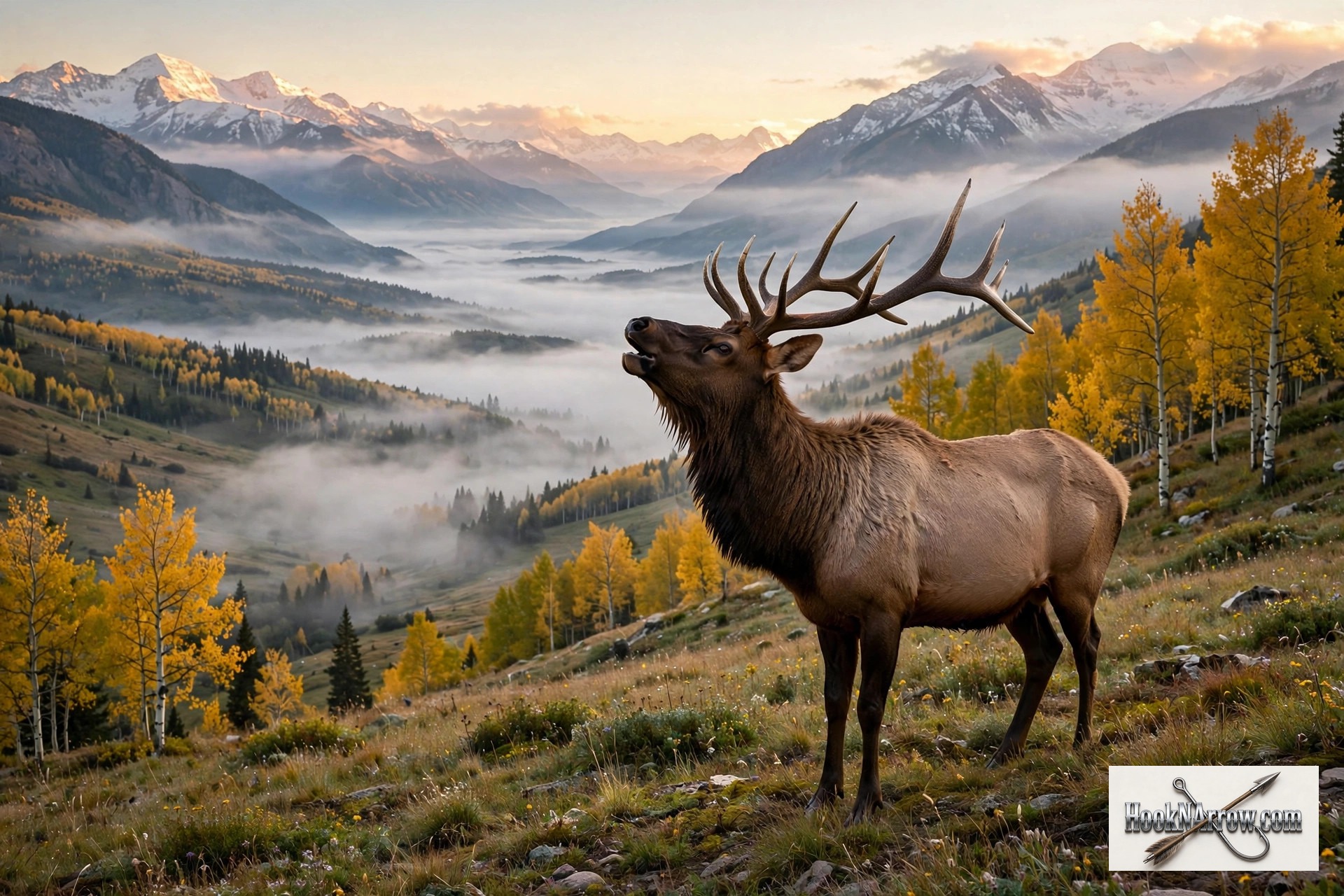
Elk live where the air gets thin. Hunting them means climbing ridges before daylight, glassing basins the size of small towns, and — if everything goes right — packing several hundred pounds of meat off a mountain on your back. The gear that works for whitetail out of a box blind won’t cut it out here. Elk country punishes weak boots, cheap glass, and packs that can’t haul meat.
You don’t need the most expensive version of everything, but you do need the right categories covered: optics that gather light at dawn and dusk, a way to know the true shooting distance on steep angles, a pack that converts into a meat hauler, game bags that protect your harvest, and boots that won’t destroy your feet by day three.
This guide explains what to look for in elk hunting gear and covers five pieces of equipment that earn their place on a western elk hunt: binoculars, a laser rangefinder, a freighter-frame pack, a complete game bag kit, and mountain boots.
Our Picks
Vortex Diamondback HD 10×42 Binoculars — best all-around glass for elk country
10×42 is the standard elk-country configuration for a reason: enough magnification to pick apart a distant basin, wide enough field of view to find elk in timber. The Diamondback HD’s HD optical system with fully multi-coated lenses delivers sharp, bright images at first and last light — the exact minutes when elk are moving. They’re argon-purged and O-ring sealed, so they’re waterproof and fogproof when the weather turns at 10,000 feet. Vortex includes the GlassPak binocular harness in the box, which keeps your glass on your chest instead of bouncing around your neck all day. And the VIP warranty is unconditional and lifetime — if you drop them off a cliff, Vortex repairs or replaces them.
Who it’s for: The elk hunter who glasses basins at dawn and dusk and wants one binocular that does everything without paying premium European prices.
Pros: HD glass genuinely punches above its price class; the included chest harness is a real upgrade over a neck strap; unconditional lifetime warranty; fully waterproof and fogproof.
Cons: 10x gets shaky freehand in high wind — a tripod adapter helps for long glassing sessions; heavier than alpha-tier glass; 15mm eye relief is just adequate for eyeglass wearers.
Purchase this item on Amazon →
Vortex Crossfire HD 1400 Laser Rangefinder — best rangefinder for steep country
Elk shots are rarely flat. The Crossfire HD 1400 ranges 1,400 yards on reflective targets and 750 yards on game, and its HCD (Horizontal Component Distance) mode corrects for shot angle — the number that actually matters when a bull is 300 yards below you on a 25-degree slope. The 5x magnification with an HD optical system is clear, the red TOLED display stays readable in any light, and at 4.8 ounces it disappears into a chest pocket or bino harness. It’s waterproof, it scans, and it’s backed by the same unconditional VIP warranty as the binoculars above.
Who it’s for: Rifle and archery elk hunters who need true horizontal distance on angled shots — which is nearly every shot in the mountains.
Pros: HCD angle compensation is essential in steep terrain; light enough to carry everywhere; red display reads clearly at dawn and dusk; lifetime warranty.
Cons: The 750-yard game range won’t satisfy extreme long-range shooters; the polymer body feels less premium than metal-housed units; CR2 batteries aren’t as easy to find as AAAs.
Purchase this item on Amazon →
ALPS OutdoorZ Commander + Pack Bag — best pack for hauling meat
The moment of truth on an elk hunt isn’t the shot — it’s what comes after. The Commander pairs a 5,250-cubic-inch pack bag with an external freighter frame: haul your camp in, then detach the bag and lash elk quarters directly to the frame for the pack out. The frame’s lashing system is designed specifically for heavy meat loads, the torso adjusts from 17 to 23 inches, and the bag itself has a spotting scope pocket and a drop-down rifle holder so your hands stay free on the trail. At around 7.3 pounds all-in, it’s not ultralight — but it’s built to carry the loads that matter.
Who it’s for: The DIY public-land hunter who packs camp in on their back and packs quarters out on the same frame.
Pros: A genuine two-in-one: camp hauler going in, meat hauler coming out; the lashing system is made for quarters; drop-down rifle holder keeps hands free; a lot of capability for the price.
Cons: Over 7 pounds is heavy by modern internal-frame standards; external frames snag in thick timber; the adjustable torso fits most, but it’s not a custom fit.
Purchase this item on Amazon →
Allen Company Backcountry Bull Kit — best game bags and field dressing kit
An elk is hundreds of pounds of meat, and it starts cooling the second it hits the ground. The Backcountry Bull Kit includes four quarter-sized game bags (25 by 40 inches — sized for elk quarters, not deer) plus a 20-by-30-inch meat bag, all in a breathable wicking fabric that lets meat cool while keeping flies, dirt, and debris off. The bags are washable and reusable. The kit also throws in the stuff hunters always forget: a protective sheet for the quartering job, gloves, a zip tie, flagging tape to mark the carcass location, and a storage pouch that keeps it all together in your pack.
Who it’s for: Anyone who might kill an elk miles from the truck — which, on a western hunt, is every elk hunter.
Pros: Bags are sized for elk quarters; it’s a complete kit, so nothing gets forgotten at the truck; breathable fabric protects meat while it cools; inexpensive insurance for a season’s worth of meat.
Cons: White bags show blood (purely cosmetic); on a long trip you’ll want a spare set; game bags don’t replace getting meat cooled and hung quickly.
Purchase this item on Amazon →
Kenetrek Mountain Extreme 400 Boots — best boots for rugged elk terrain
Elk hunting is measured in vertical feet, and your boots are the foundation of every one of them. The Mountain Extreme 400 is built for exactly this: 10-inch full-leather uppers, 400 grams of Thinsulate insulation, a Windtex waterproof-breathable membrane, and Kenetrek’s K-Talon outsole with aggressive lugs that bite on rock, mud, and snow. The stiff midsole and tall leather upper support your ankles when side-hilling with a heavy pack — the move that destroys lesser boots and the feet inside them. They’re an investment, and they demand a real break-in, but they’re the boot serious mountain hunters keep coming back to.
Who it’s for: The hunter covering steep, rocky miles with weight on their back in weather that can’t make up its mind.
Pros: Stiff, supportive platform built for heavy pack loads; waterproof and warm without overheating on the move; exceptional durability — and resoleable; proven on the toughest mountain hunts.
Cons: Premium price; needs a genuine break-in period — do not debut them on opening morning; heavier than uninsulated hiking-style boots.
Purchase this item on Amazon →
What to Look For
Glass quality over raw magnification. In elk country you glass at dawn and dusk, when light is scarce and elk are moving. A bright, sharp 10×42 beats a dim 12×50 every time. Look for fully multi-coated lenses, good low-light transmission, and waterproof/fogproof construction — mountain weather changes fast.
Angle-compensated ranging. A line-of-sight reading lies to you on slopes. A rangefinder with an angle-compensation mode (Vortex calls it HCD) gives you the true horizontal distance, which is what your bullet or arrow actually cares about. In steep terrain this isn’t a luxury — it’s the difference between a clean hit and a miss.
Meat-hauling capability. Before you buy any elk pack, ask one question: how does it carry quarters? An external freighter frame or a pack with a dedicated load shelf turns a brutal pack-out into a manageable one. A regular backpacking pack will technically work, but you’ll feel every pound of the difference.
Game bags sized for elk. Deer-sized bags don’t fit elk quarters. Look for bags at least 24 by 36 inches, in a breathable fabric that wicks and cools rather than trapping heat. Reusable bags you can wash beat single-use cheesecloth-style bags over a full season.
Boot fit, support, and waterproofing. Try boots on with the socks you’ll hunt in, and buy for a long day’s fit — feet swell. You want a stiff shank for side-hilling, real ankle support for uneven ground, and a waterproof membrane. Then break them in for weeks before the season, not days.
Weight versus durability. Every ounce matters at 10,000 feet, but ultralight gear that fails on day four is heavier than durable gear that lasts. Spend your weight budget where failure hurts most: boots, pack frame, and optics.
Elk Hunting Tips
- Glass more than you walk. Elk country is big, and elk are visible at long distances in the right light. Spend the first and last hour of every day behind your binoculars before you spend it behind your boots. You’ll find more elk and burn fewer calories.
- Practice calling before September. A diaphragm call or bugle tube takes weeks of practice to sound like an elk instead of a dying goose. Start in the summer, practice on your commute, and have cow calls down cold before the rut — bulls are far less forgiving than your truck’s rearview mirror.
- Break in your boots months ahead. New boots on an elk hunt are how blisters are born. Wear them on training hikes with weight, in the terrain you’ll hunt, until they feel like an extension of your feet.
- Hunt the wind like your season depends on it. It does. An elk’s nose is its best defense — better than its eyes or ears. Check the wind constantly, plan every approach with it, and don’t be proud about backing out when it swirls.
- Be ready to pack meat the instant you shoot. Carry your game bags and a knife on your person, not back at camp. An elk down at last light, miles in, becomes a race against warm meat and bears. The hunters who pack out clean are the ones who planned for it before the trigger broke.
- Train for altitude, not just distance. Five flat miles at sea level is not five mountain miles at 10,000 feet. Hike hills with a weighted pack, and if you can, arrive a couple of days early to acclimate. The mountain doesn’t care about your excuses.
FAQ
What gear do I actually need for a first elk hunt? The non-negotiables: broken-in mountain boots, a pack that can haul meat, 10×42 binoculars, a rangefinder with angle compensation, game bags, a sharp knife, and layers for weather swings. Calls matter most for September archery hunts. Everything else — spotting scopes, tripods, premium everything — is an upgrade, not a requirement. Don’t let a gear list talk you out of going.
Are 10×42 binoculars enough, or do I need a spotting scope? For most elk hunting, 10×42 binoculars are enough — they’re what you’ll use 95 percent of the time. A spotting scope earns its place in wide-open basins where you’re judging bulls at two miles, or on trophy-focused hunts where you need to count tines before committing to a stalk. If you can only buy one optic, buy the binoculars.
When should I call versus spot-and-stalk? September archery season overlaps the rut, and that’s calling season — bugles to locate bulls, cow calls to pull them in. Later rifle seasons, after the rut winds down, shift toward spot-and-stalk: glass feeding areas at dawn and dusk and plan careful approaches. Match the tactic to the season, not the other way around.
How do you pack out an elk? Field dress it, then quarter it: remove the four quarters, backstraps, tenderloins, and neck meat. Get each piece into a breathable game bag immediately, hang the bags in shade with airflow to cool, and pack them out — usually two to four trips with a good frame pack, or with help. Keep meat clean, keep it cool, and don’t leave it on the ground any longer than necessary.
What kind of boots work best for elk country? Tall (8 to 10 inch), stiff, waterproof boots with aggressive tread and real ankle support. Insulation depends on your season — 400 grams is the versatile middle ground for September through October. Fit matters more than brand: try them with hunting socks, expect feet to swell, and break them in thoroughly before the hunt.
How much should I budget for elk hunting gear? Prioritize in this order: boots, optics, pack. You can get hunt-ready with quality mid-range gear in each category without buying the flagship of anything. A solid setup — good boots, a proven 10×42, an angle-compensating rangefinder, a freighter-frame pack, and game bags — runs well under what a single guided day costs. The tag and the travel are the expensive parts; the gear just has to work.
As an Amazon Associate I earn from qualifying purchases.
Keep Reading: More Buying Guides
Fishing:
- Best Saltwater Fishing Gear 2026
- Best Fly Fishing Gear 2026
- Best Catfishing Gear 2026
- Best Baitcasting Reels for Texas Anglers (2026)
- Best Bass Fishing Rods for Texas Anglers (2026)
- Best Crappie Fishing Gear for Texas (2026 Guide)
- Best Fishing Apparel for Texas Heat (2026 Guide)
- Best Fishing Line for Bass (2026)
- Best Tackle Boxes and Tackle Storage for Anglers (2026)
Hunting:
- Best Bear Hunting Gear 2026
- Best Mountain Lion Hunting Gear 2026
- Best Binoculars for Texas Hunting (2026 Guide)
- Best Deer Hunting Scopes for Texas (2026 Guide)
- Best Hunting Knives for Texas Hunters (2026 Guide)
- Best Thermal Scopes for Hog & Predator Hunting (2026 Guide)
- Best Trail Cameras for Whitetail (2026)
Leave a Reply