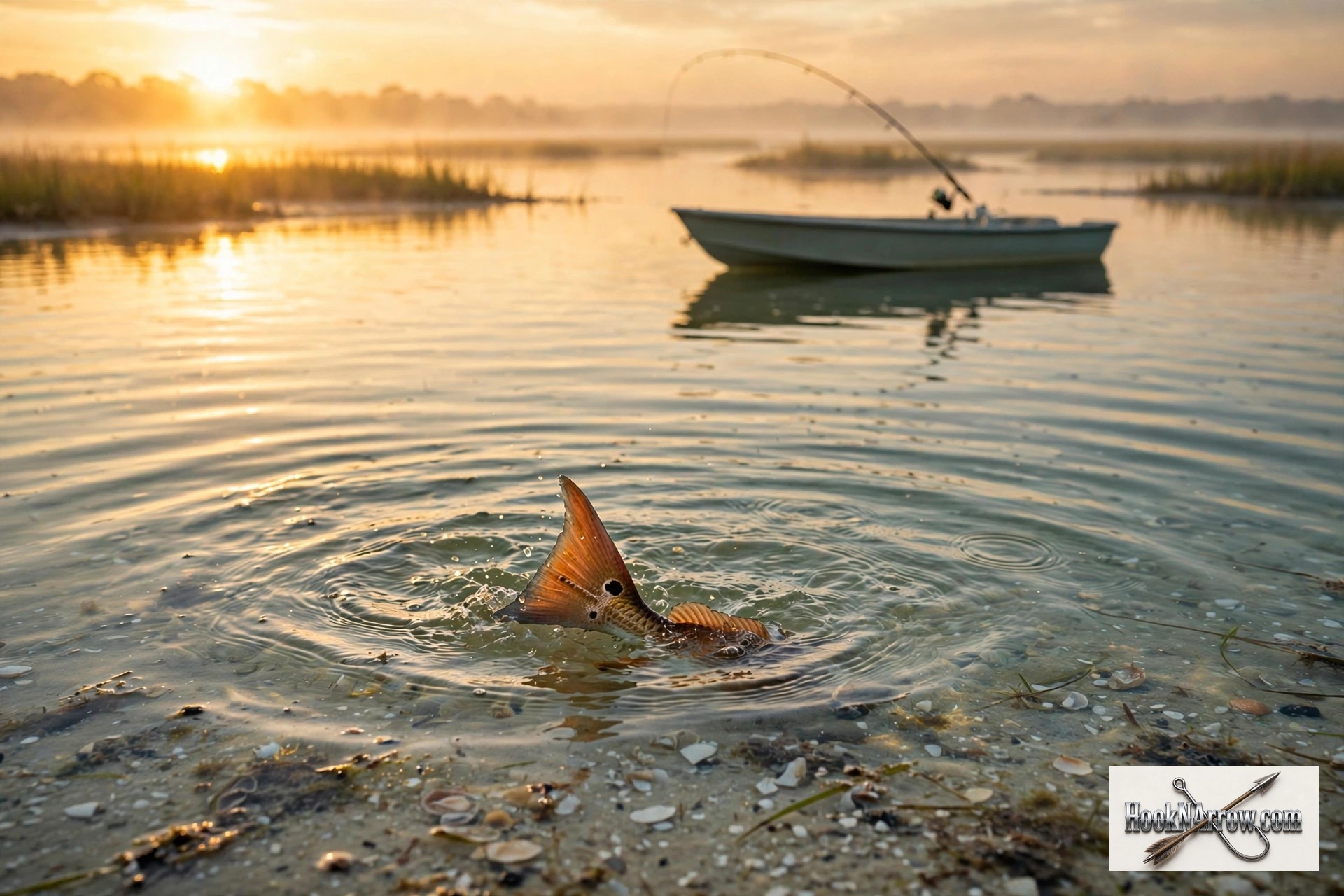
Saltwater is where fishing gear goes to die. Sun, sand, and salt spray eat cheap equipment alive — a reel that isn’t built for it will be grinding and seizing within a season of bay fishing. The good news is you don’t need offshore-grade money to fish the bays, jetties, piers, and nearshore water. You need sealed parts, a real drag, braid on the spool, and the habit of rinsing everything when you get home.
This guide covers the core kit for inshore and nearshore saltwater fishing — the reel, the line, the tools, and the terminal tackle — with five picks that hold up to salt without costing a fortune. Whether you’re wading a Gulf Coast flat for redfish, working a jetty for snook, or soaking bait off a pier, this is the gear that survives.
Our Picks
PENN Battle III 4000 Spinning Reel — best all-around inshore reel
The Battle III is the default answer in saltwater for a reason. The full metal body and sideplates shrug off the abuse that kills lesser reels, PENN’s CNC gear technology keeps the retrieve smooth under load, and the HT-100 carbon fiber drag puts out 15 pounds of max drag — enough for slot redfish, snook, and the occasional nearshore surprise. The 4000 size in the high-speed 7.1:1 configuration picks up 35 inches of line per crank, and the spool is braid-ready with line capacity rings, holding 295 yards of 20-pound braid.
Who it’s for: The inshore angler who wants one reel for redfish, speckled trout, flounder, and snook — and a reel that won’t quit when a jack crevalle crashes the party.
Pros: Full metal body at a workingman’s price; the HT-100 drag is smooth and proven over decades; braid-ready spool with honest capacity; the 4000 size covers nearly all inshore species.
Cons: Heavier than premium reels in this class; not fully sealed like reels costing three times more — rinse it after every trip; the high-speed retrieve trades some cranking power on deep, heavy fish.
Purchase this item on Amazon →
Daiwa BG2500 Spinning Reel — best value saltwater workhorse
The BG has a cult following among saltwater anglers because it outlasts reels twice its price. The machined aluminum HardBodyz body is rigid enough that the oversized Digigears — 20 to 40 percent larger than the competition’s — stay meshed under heavy loads instead of flexing and wearing. The 2500 size runs a 5.6:1 gear ratio with 33.2 inches of retrieve per crank, 6+1 bearings, and Daiwa’s ATD carbon drag good for 13.2 pounds. It’s old-school in looks and new-school in durability.
Who it’s for: Lighter inshore work — speckled trout, flounder, slot reds on the flats — or anyone who wants a proven saltwater reel without paying the premium-reel tax.
Pros: Oversized gears genuinely last longer; machined aluminum body doesn’t flex; smooth ATD drag with low start-up inertia; outstanding toughness for the money.
Cons: Heavier than modern lightweight reels; the 2500 size is light for bull reds or nearshore work — size up to a 4000 for that; cosmetics are old-school black and gold.
Purchase this item on Amazon →
PowerPro Spectra Braided Fishing Line — best braided line for saltwater
Braid is the standard main line for inshore saltwater fishing, and PowerPro’s Spectra fiber is the benchmark. The Enhanced Body Technology packs the fibers into a rounder, smoother line that casts long, doesn’t dig into itself on the spool, and has virtually no stretch — so you feel a trout tap a jig in 10 feet of murky bay water. The strength-to-diameter ratio is the whole point: 20-pound braid has the diameter of 6-pound mono, which means more line capacity, longer casts into the wind, and instant hooksets at distance.
Who it’s for: Anyone spooling a saltwater spinning reel. If you’re still fishing straight mono inshore, this is the single biggest upgrade you can make.
Pros: Enormous strength for its diameter; zero stretch telegraphs every bite; lasts multiple seasons without going bad like mono; moss green blends into inshore water.
Cons: Needs a fluorocarbon leader — braid is visible and has poor abrasion resistance at the business end; can dig into itself under heavy drag if spooled loose; costs more than mono up front (but outlasts it).
Purchase this item on Amazon →
Piscifun Aluminum Fishing Pliers — best saltwater fishing pliers
Saltwater fish have teeth, spines, and treble hooks, and you do not want your fingers anywhere near any of them. These pliers are built from aircraft-grade anodized aluminum that won’t rust, with titanium-coated stainless jaws, a split-ring tip, and replaceable tungsten carbide cutters that slice braid clean instead of fraying it. They’re spring-loaded for one-handed use and come with a nylon sheath, coiled lanyard, and belt loop — because pliers that go overboard are pliers you’ll buy twice.
Who it’s for: Every saltwater angler, period. Hook removal, cutting braid, opening split rings, crimping sleeves — this tool does all of it.
Pros: Anodized aluminum body is genuinely corrosion-proof; tungsten cutters are replaceable when they dull; sheath and lanyard included; a top-10 seller in fishing pliers for good reason.
Cons: At 7.1 inches it’s a handful in a small tackle tray; the anodizing will show wear over hard seasons; for toothy fish like mackerel, pair it with a long hook remover.
Purchase this item on Amazon →
AGOOL 184-Piece Saltwater Tackle Kit — best starter saltwater tackle assortment
Starting a saltwater box from zero means buying dozens of little things separately — or buying this kit once. The 184-piece assortment packs wire leader rigs, circle hooks, jig heads, pyramid sinkers, barrel and three-way swivels, duo-lock snaps, a spoon, a bucktail jig, grub baits, and beads into one compartment box. It’s aimed squarely at surf, pier, jetty, and beach fishing for redfish, snook, sea trout, bluefish, and pompano — the exact species most beginners chase first.
Who it’s for: The beginner building a first saltwater box, or the traveling angler who needs a ready-made pier and surf kit without a tackle-shop run.
Pros: One box covers rigs, hooks, sinkers, and terminal tackle; stainless and corrosion-resistant components; the cheapest way to get fishing immediately.
Cons: It’s a starter kit, not premium tackle — you’ll upgrade your favorite pieces over time; the lure selection is basic; dedicated anglers will still build a custom box eventually.
Purchase this item on Amazon →
What to Look For
Corrosion resistance. This is the whole game in saltwater. Look for anodized aluminum bodies, stainless steel bearings and hardware, and sealed or shielded bearings. Avoid unprotected chrome, cheap pot metal, and anything with exposed plain-steel parts — salt finds every weakness. When in doubt, aluminum and stainless win.
Sealed drag. A saltwater fish’s first run is violent, and your drag has to be smooth from the first inch — no jerking, no sticking. Carbon fiber drag washers (like PENN’s HT-100 or Daiwa’s ATD) stay smooth and resist heat buildup. Sealed drag stacks keep salt and sand out of the washers.
Reel size. Size the reel to the fish. A 2500–3000 handles trout, flounder, and light inshore work. A 4000 is the all-around inshore size — redfish, snook, and most of what you’ll hook from a bay boat or kayak. Step up to 5000 and beyond for nearshore kings, jacks, tarpon, and bull reds.
Braid plus leader. Run braided main line for capacity, casting distance, and sensitivity, then tie on 2 to 3 feet of 20 to 30-pound fluorocarbon leader. The braid does the work; the leader provides abrasion resistance around oyster shell and dock pilings plus near-invisibility to the fish.
Line capacity. Saltwater fish run — a big redfish or jack can strip 100 yards without breathing hard. A 4000-size reel should hold 200-plus yards of braid. If the spool looks small for the water you’re fishing, it is.
The rinse habit. No gear survives salt without maintenance. After every trip: loosen the drag, rinse everything with freshwater (don’t blast it with high pressure), let it dry, and hit moving parts with a drop of reel oil now and then. Five minutes at the driveway saves a hundred-dollar reel.
Saltwater Fishing Tips
- Rinse everything, every trip. Rod, reel, pliers, tackle box — all of it gets a freshwater rinse before it goes in the garage. Salt keeps working long after you’re off the water.
- Fish the moving water. Tides move bait, and bait moves fish. The last two hours of an incoming tide and the first of the outgoing are prime on most bays and flats. A tide chart is as important as your tackle.
- Use circle hooks with bait. With live shrimp, mullet, or cut bait, circle hooks set themselves in the corner of the jaw — better hookups, easier releases, and fewer gut-hooked fish.
- Re-tie after every good fish. Oyster shell, dock pilings, and toothy fish nick leaders fast. Check the last two feet of line constantly and re-tie at the first sign of abrasion.
- Match the leader to the teeth. Around bluefish, Spanish mackerel, or sharks, step up to heavy fluorocarbon (60lb+) or a short wire leader. Losing lures to bite-offs gets expensive fast.
- Keep pliers on your body, not in the box. Belt sheath, lanyard, pocket — when a fish is flopping in the net with trebles flying, you don’t have time to dig through a tackle bag.
FAQ
What size spinning reel is best for inshore saltwater fishing? A 3000 to 4000-size reel is the sweet spot. A 4000 like the PENN Battle III covers redfish, trout, flounder, and snook with room to spare, while a 2500 like the Daiwa BG is ideal for lighter tackle work. Go bigger (5000+) only when you’re targeting nearshore species like kingfish, tarpon, or bull reds.
Is braided line better than monofilament in saltwater? For the main line, yes — braid’s thin diameter gives you more capacity and longer casts, and zero stretch means better hooksets and bite detection. But always fish a fluorocarbon leader (20 to 30 pounds, 2 to 3 feet) ahead of it for abrasion resistance and invisibility. Straight braid to the lure is asking for break-offs.
Can I use my freshwater gear in saltwater? You can in a pinch, but rinse it religiously — freshwater reels corrode faster because their bearings and hardware aren’t built for salt, and their drags usually aren’t sealed. One season of regular saltwater use will age a freshwater reel several years. If you’re fishing salt more than a few times a year, buy saltwater-rated gear.
How do I keep my saltwater gear from corroding? Rinse with freshwater after every trip, loosen the drag before storage so the washers don’t compress, let everything dry completely, and apply a drop of reel oil to moving parts periodically. Never blast a reel with a high-pressure hose — it drives salt deeper into the gearbox. Store in a dry place, not a damp garage corner.
Do I need a leader when fishing saltwater? Yes. Two to three feet of 20 to 30-pound fluorocarbon joined to your braid with an FG or double-uni knot is the standard inshore setup. The leader takes the abuse from shells, pilings, and fish mouths, and its low visibility matters in clear water. Re-tie it the moment it looks nicked.
What’s a good first saltwater setup? A 4000-size spinning reel like the PENN Battle III on a 7-foot medium-fast rod, spooled with 20-pound braid and a 25-pound fluorocarbon leader. That one outfit handles redfish, trout, flounder, and snook across bays, piers, and jetties — and it’s the setup most inshore guides would hand a beginner.
As an Amazon Associate I earn from qualifying purchases.
Keep Reading: More Buying Guides
Fishing:
- Best Baitcasting Reels for Bass Fishing (2026 Guide)
- Best Bass Fishing Rods (2026 Guide)
- Best Crappie Fishing Gear: Rods, Reels, Jigs & Minnow Rigs
- Best Fishing Apparel for Hot Weather: Stay Cool and Sun-Safe on the Water
- Best Fishing Line for Bass — Mono vs. Fluorocarbon vs. Braid
- Best Tackle Boxes and Tackle Storage for Anglers (2026)
- Best Fly Fishing Gear 2026
- Best Catfishing Gear 2026
Hunting:
- Best Binoculars for Hunting (2026) — What Actually Works in the Field
- Best Deer Hunting Scopes (2026 Guide)
- Best Hunting Knives for Deer and Hogs (2026)
- Best Thermal Scopes for Hog & Predator Hunting (2026 Guide)
- Best Trail Cameras for Whitetail (2026)
- Best Bear Hunting Gear 2026
- Best Elk Hunting Gear 2026
- Best Mountain Lion Hunting Gear 2026
Leave a Reply