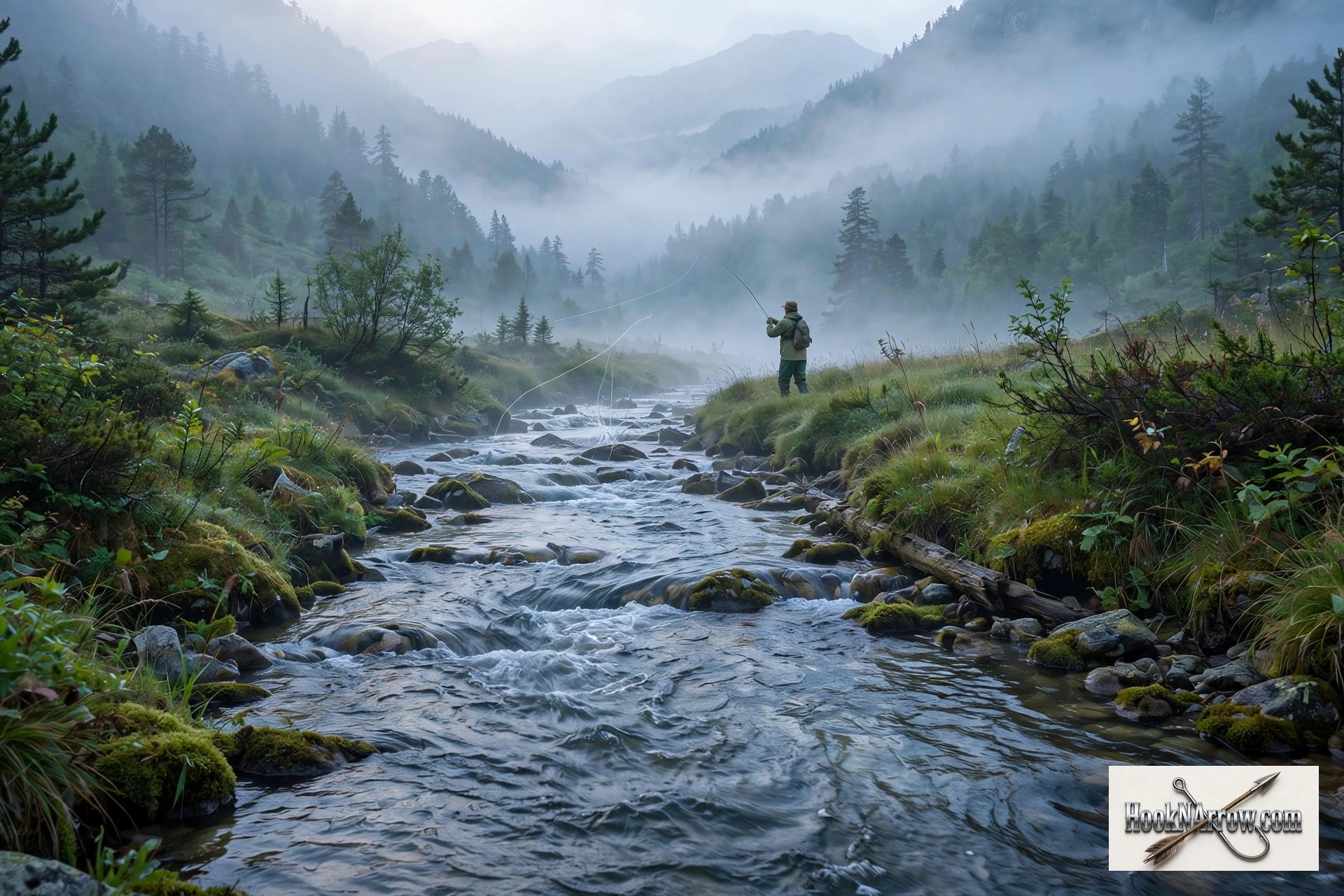
Fly fishing looks complicated from the bank — the vest, the line whipping around, the Latin names for bugs — but strip it down and it’s just fishing with a different delivery system. Instead of throwing the lure, you throw the line, and the line carries a nearly weightless fly to the fish. A 9-foot 5-weight outfit handles the overwhelming majority of American trout water, plus bass, panfish, and the scrappy Guadalupe bass in Texas Hill Country creeks. You don’t need a $900 rod to start. You need a balanced outfit, a box of proven flies, and a few weekends on the water.
The money logic in fly fishing is friendlier than it looks. A complete starter outfit — rod, reel, line, leader, and case — costs less than a decent baitcasting setup, and the upgrade path is clear: better line first, a better reel second, and a better rod once your casting tells you what you actually like. Start with a combo, upgrade individual pieces as your skills outgrow them, and you’ll never buy the same thing twice.
This HookNArrow.com guide explains what to look for in fly fishing gear and covers five pieces that take you from first cast to serious angler: a complete starter outfit, a value-priced reel worth upgrading to, a spare fly line, a fly assortment that covers real hatches, and breathable waders for cold water.
What to Look For
Rod weight and length. Fly rods are rated by line weight, and for a first rod the answer is almost always a 9-foot 5-weight. It’s the do-everything trout rod: long enough to mend line and roll cast, light enough to fish all day, and heavy enough to handle wind, weighted nymphs, and the occasional bass. Go lighter (3 or 4 weight) for small creeks and heavier (6 to 8 weight) for bass, steelhead, or saltwater — but the 5-weight is home base.
Rod action. Action describes how the rod flexes. Fast-action rods are stiff and powerful; slow-action rods bend deep and feel buttery. Medium-fast is the beginner sweet spot — forgiving enough to learn timing on, with enough backbone to punch a cast into the wind. Four-piece rods break down for travel and are the modern standard.
The reel. Here’s the open secret of trout fly fishing: the reel mostly holds line. You strip line in by hand for most trout, so a machined-aluminum reel with a smooth disc drag is a luxury, not a necessity — until a big fish runs. Buy a decent reel once and it’ll outlast three rods. Match the reel weight to your rod: a 5/6 reel on a 5-weight rod.
Fly line. The line is the engine of the cast, and cheap line is the single biggest handicap a beginner can give themselves. Weight-forward floating (WF-F) is the standard trout line — the heavy head loads the rod and shoots line forward. Match the line weight to the rod weight, and look for welded loops at both ends for quick leader changes.
Flies. You need far fewer patterns than the fly shop wall suggests. Nymphs (fished subsurface) catch the most trout day in and day out; dry flies (fished on top) are the most fun; streamers imitate baitfish and move the big ones. A starter assortment covering those three categories in common sizes will catch fish anywhere.
Waders. Breathable stockingfoot waders are the standard: a waterproof-breathable upper with neoprene booties, worn with separate wading boots. Breathable beats neoprene for everything except dead-winter fishing — you’ll sweat less, move better, and fish longer. Stockingfoot (versus bootfoot) lets you pick boots with real ankle support and felt or rubber soles matched to your rivers.
Fit and sizing. Waders come in a pile of sizes for a reason — too-short waders stress the crotch seams and leak early, too-long legs bunch in the boots. Check the manufacturer’s size chart against your actual measurements, not your jeans size. And always wear a wading belt: it keeps water out if you slip and can genuinely save your life.
Our Picks
Redington Crosswater Fly Fishing Outfit — best starter outfit
The Crosswater outfit is the classic first fly rod for a reason: a 9-foot 5-weight medium-fast graphite rod in four pieces, a matched Crosswater reel with a smooth disc drag, RIO Mainstream weight-forward floating line already on the reel, a leader, and a zippered travel case that holds all of it. It’s genuinely ready to fish out of the box — tie on a fly and go. The rod is forgiving enough to learn on without being a noodle you’ll outgrow in a month, and Redington backs it with a warranty.
Who it’s for: The first-time fly angler who wants one box that contains everything — trout streams, Hill Country creeks, farm ponds, all of it.
Pros: Truly complete kit — rod, reel, line, leader, case; the 9′ 5wt configuration is the universal starter; medium-fast action is easy to learn on; breaks down into four pieces for travel.
Cons: The included line is serviceable, not great — you’ll want better line eventually; the reel is basic compared to a machined upgrade; no flies included, so budget a starter assortment too.
Purchase this item on Amazon →
Piscifun Sword Fly Fishing Reel — best value reel upgrade
The Sword is the reel that broke the price floor on machined fly reels: a CNC-machined 6061-T6 aluminum body, a smooth multi-disc drag, and a mid-arbor design that picks up line fast and reduces line memory. It comes in weights from 3/4 up to 9/10 — grab the 5/6 to match a standard 5-weight outfit — and it’s consistently one of Amazon’s best-selling fly reels, which means thousands of anglers have already voted with their wallets. Some versions come pre-loaded with line, which gets a backup setup fishing fast.
Who it’s for: The angler who started with a combo and wants a real machined reel without paying machined-reel prices — or anyone building a second outfit.
Pros: Genuine CNC-machined aluminum at a cast-reel price; smooth, adjustable drag for when a big fish actually runs; mid-arbor picks up line quickly; available in every weight from small creeks to saltwater.
Cons: Fit and finish isn’t at the premium-brand level; the pre-loaded line (on versions that include it) is basic — plan to replace it; the drag knob takes some dialing to learn.
Purchase this item on Amazon →
SF Fly Fishing Line with Two Welded Loops — best spare/upgrade line
Line is the cheapest meaningful upgrade in fly fishing, and this SF weight-forward floating line is the proof. Ninety feet of weight-forward taper with welded loops at both ends — one for the leader, one for the backing — so rigging takes seconds instead of nail knots. The WF5F matches the standard 5-weight starter rod, and the hi-vis color helps you track the line and detect strikes. Keep one as a spare in your vest and you’ll never lose a day to a cracked or sun-rotted line again.
Who it’s for: The combo-kit owner ready for the single biggest casting upgrade under twenty bucks, or anyone who wants a backup line in the vest.
Pros: Welded loops on both ends make leader changes tool-free; weight-forward taper loads beginner rods easily; high-visibility color aids strike detection; cheap enough to keep a spare.
Cons: Not as slick or durable as premium $80+ lines; the coating can develop memory if stored wound tight in heat; color options are about visibility, not stealth.
Purchase this item on Amazon →
Ansnbo 36-Piece Fly Fishing Flies Kit — best fly assortment
Thirty-six hand-tied flies across 18 proven patterns — Adams, Elk Hair Caddis, Pheasant Tail nymphs, Woolly Buggers, ants, and more — in hook sizes 8 through 16, packed in a waterproof fly box. That’s dries, wets, nymphs, and streamers: the full spread a beginner needs to fish any hatch or prospect unknown water. The patterns are the classics for a reason — they’ve been catching trout (and bass, and panfish) for decades — and at this price you won’t cry when a tree eats your best Elk Hair Caddis.
Who it’s for: The new fly angler staring at a fly shop wall in despair — this box skips the analysis paralysis and gets you fishing.
Pros: Covers dries, nymphs, wets, and streamers in one box; classic proven patterns, not random filler; waterproof box included; cheap enough that losing flies to trees doesn’t hurt.
Cons: Hand-tied quality varies — inspect hooks before fishing; you may want to sharpen a few out of the box; serious anglers will eventually want locally-tied patterns for their home water.
Purchase this item on Amazon →
FROGG TOGGS Hellbender Breathable Stockingfoot Chest Wader — best waders
The Hellbender is the wader half the internet learned in: a 4-ply breathable nylon upper with double-reinforced knees, 4mm neoprene booties, an oversized chest pocket plus zippered handwarmer pockets, and adjustable suspenders and wading belt. Breathable stockingfoot is the right configuration for most fly fishing — comfortable across seasons, with your choice of wading boots underneath — and the Hellbender delivers it at a fraction of premium-wader money. Sixteen size combinations mean you can actually get a fit that doesn’t stress the seams.
Who it’s for: The angler moving beyond wet-wading into cold water and cold seasons — spring creeks, tailwaters, and winter trout.
Pros: Breathable upper fishes comfortably across seasons; stockingfoot design pairs with proper wading boots; reinforced knees survive rocky banks; wide size range for a real fit.
Cons: You’ll still need to buy wading boots separately; breathable waders demand seam care — dry them properly; tall anglers should double-check inseam measurements.
Purchase this item on Amazon →
Fly Fishing Tips
- Practice on grass first. Tie a piece of yarn to your leader and cast on the lawn for a few evenings before you ever see water. Learning the timing of the backcast without trees, wind, and an audience watching will save you real frustration.
- Start subsurface. Trout eat the vast majority of their food underwater, so nymphs and Woolly Buggers will outfish dry flies most days. Dry-fly fishing is the dream, but nymphing is the groceries.
- Mend your line. The number-one beginner skill after the basic cast: flip the line upstream after it lands so your fly drifts naturally instead of dragging. A drag-free drift catches fish; a dragging fly catches nothing.
- Wear the wading belt. Every time. It takes five seconds and it keeps your waders from filling with water if you slip. In cold, moving water that’s the difference between a story and a statistic.
- Barbless is better while learning. Pinch the barbs on your flies. Hook removal — from fish and from yourself — gets dramatically easier, and the fish you release swim off stronger.
- Don’t sleep on warm water. Fly fishing isn’t just trout: bass, bluegill, and Guadalupe bass in the Texas Hill Country eat flies with enthusiasm, and warm-water species forgive sloppy casts that trout won’t.
FAQ
What weight fly rod should a beginner buy? A 9-foot 5-weight. It handles the widest range of trout water, casts the widest range of flies, and every shop, guide, and friend you meet will have advice and spare gear that matches it. Specialize later — start in the middle.
Do I need expensive gear to start fly fishing? No. A complete starter outfit costs less than many single baitcasting combos, and the fish genuinely don’t know what you paid. Spend your early money on time on the water and a few lessons, not on premium gear you can’t yet feel the difference in.
What’s the difference between weight-forward and double-taper fly line? Weight-forward (WF) concentrates mass in the front of the line for longer casts and easier loading — it’s the beginner standard. Double-taper (DT) is symmetrical and delicate at short range but harder to cast far. Start with weight-forward floating.
Do I need waders, or can I wet-wade? In warm weather and warm water, wet-wading in shorts and wading sandals is one of fly fishing’s great pleasures — Texas Hill Country summer fishing is perfect for it. When water temperatures drop into the 50s and below, or you’re fishing more than an hour, breathable waders keep you comfortable and safe.
Can you fly fish in Texas? Absolutely. The Guadalupe River below Canyon Lake holds stocked rainbow trout in winter, and year-round the Hill Country creeks — the Llano, Guadalupe, San Marcos, and their tributaries — hold Guadalupe bass, largemouth, and sunfish that attack flies aggressively. A 5-weight is perfect for all of it.
How do I know which fly to use? Start with the classics that work everywhere: a Woolly Bugger, a Pheasant Tail nymph, an Elk Hair Caddis, and an Adams. Then do what every good angler does — flip over a streamside rock, look at what’s actually living in the creek, and pick the fly in your box that looks most like it. When in doubt, ask the local fly shop what’s hatching.
As an Amazon Associate I earn from qualifying purchases.
Keep Reading: More Buying Guides
Fishing:
- Best Baitcasting Reels for Bass Fishing (2026 Guide)
- Best Bass Fishing Rods (2026 Guide)
- Best Crappie Fishing Gear: Rods, Reels, Jigs & Minnow Rigs
- Best Fishing Apparel for Hot Weather: Stay Cool and Sun-Safe on the Water
- Best Fishing Line for Bass — Mono vs. Fluorocarbon vs. Braid
- Best Tackle Boxes and Tackle Storage for Anglers (2026)
- Best Saltwater Fishing Gear 2026
- Best Catfishing Gear 2026
Hunting:
- Best Binoculars for Hunting (2026) — What Actually Works in the Field
- Best Deer Hunting Scopes (2026 Guide)
- Best Hunting Knives for Deer and Hogs (2026)
- Best Thermal Scopes for Hog & Predator Hunting (2026 Guide)
- Best Trail Cameras for Whitetail (2026)
- Best Bear Hunting Gear 2026
- Best Elk Hunting Gear 2026
- Best Mountain Lion Hunting Gear 2026
Leave a Reply